UNVEILINGS
Embracing Imperfection through Textile, Light & Memory
STEP IN...
LEAVE IMPERFECTION BEHIND
This is where healing begins
Design Approach
This project was approached as a system of translation—transforming emotional suppression into spatial and material expression.
Through light, shadow, and textile, I developed a visual language where fragmentation, layering, and distortion reflect internal emotional states.
Each design decision—material choice, form, and placement—was guided by the intention to create an environment that allows users to feel, reflect, and reconnect.
This approach allowed the project to function not just as a visual composition, but as a responsive and evolving experiential system.
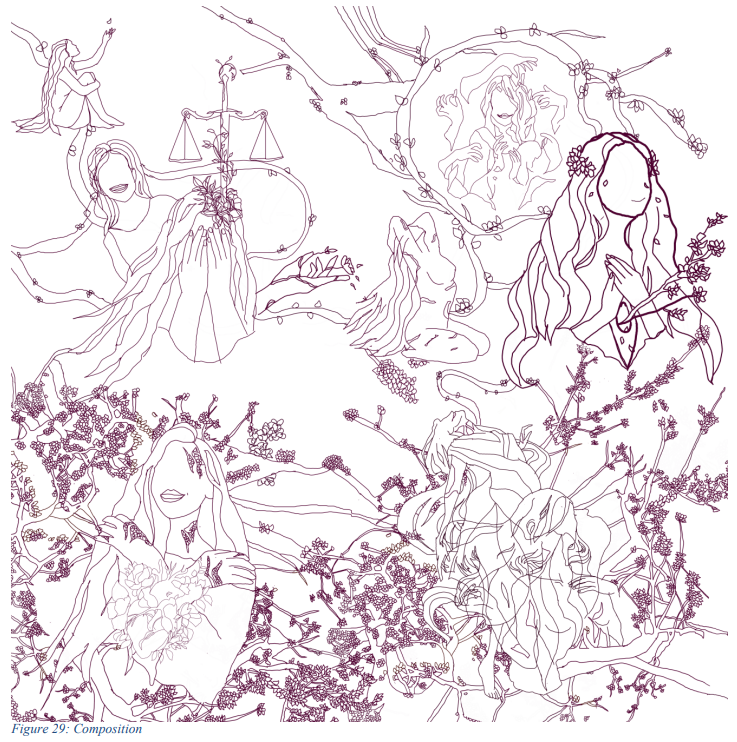
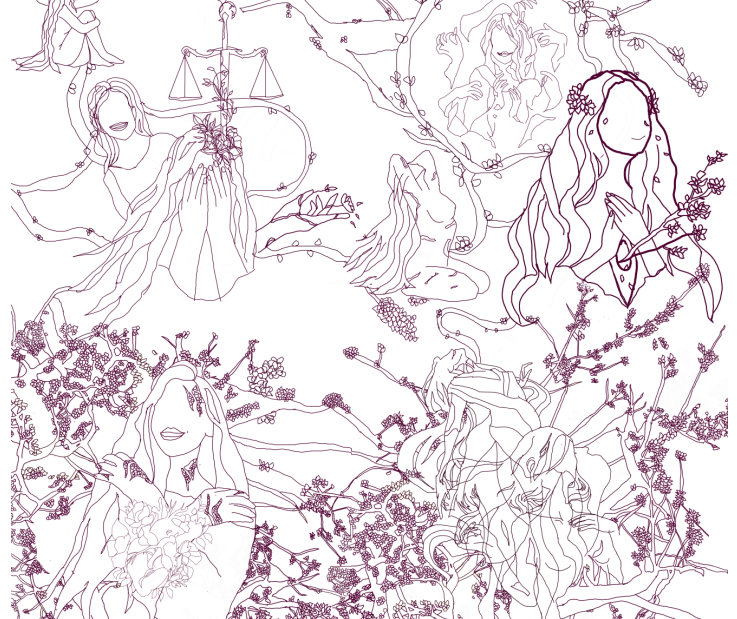
We are taught to be perfect.
Hide your flaws.
Silence your pain.
Become what others need.
Until there is nothing left of you.
So quiet,
You begin to disappear.
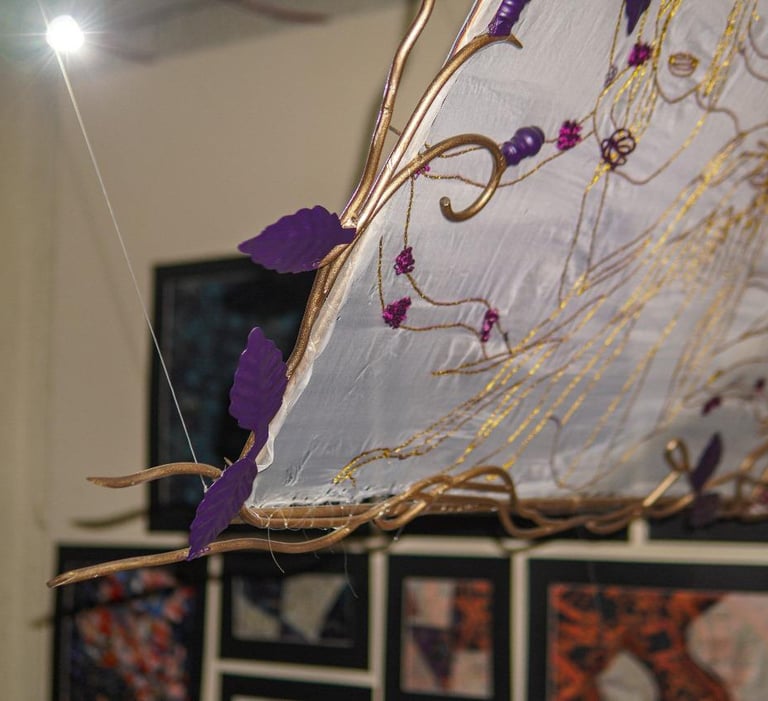
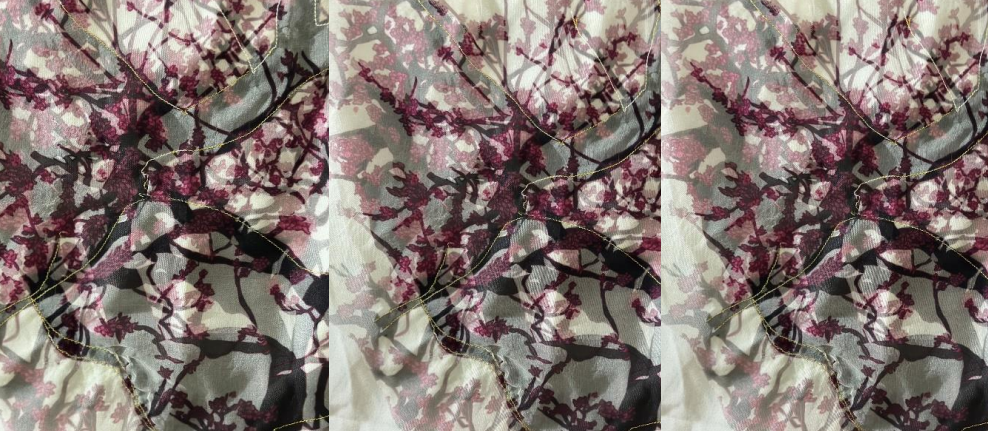
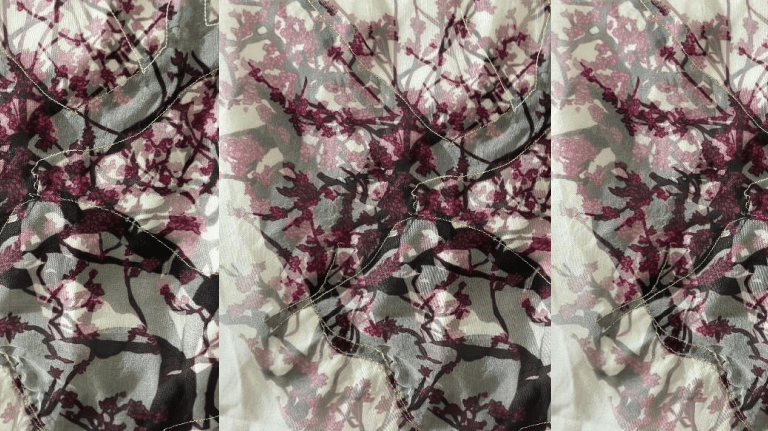
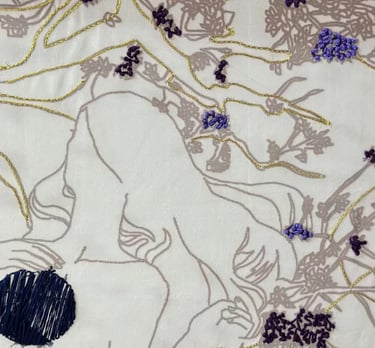
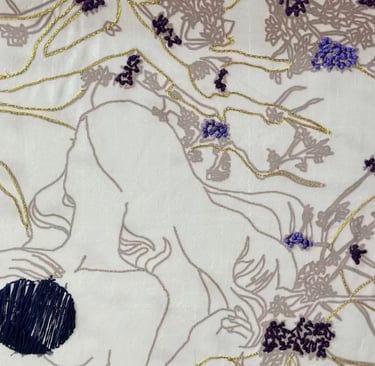
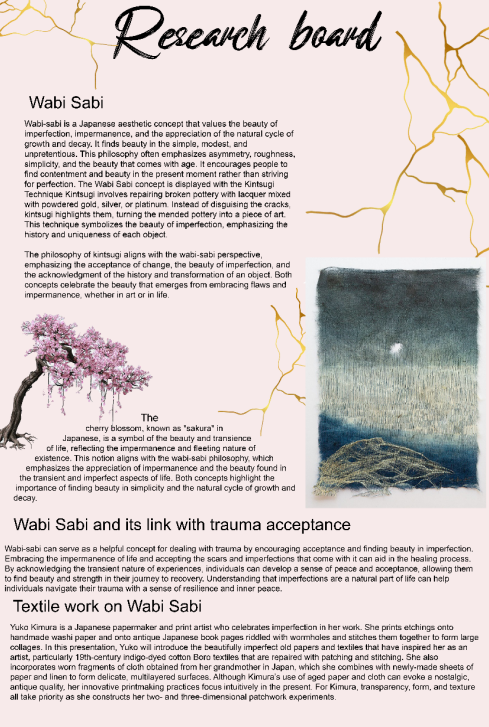
Wabi-Sabi teaches us to find beauty in imperfection.
Through Kintsugi, cracks are not hidden—
they are filled with gold.
What if we treated ourselves the same way?
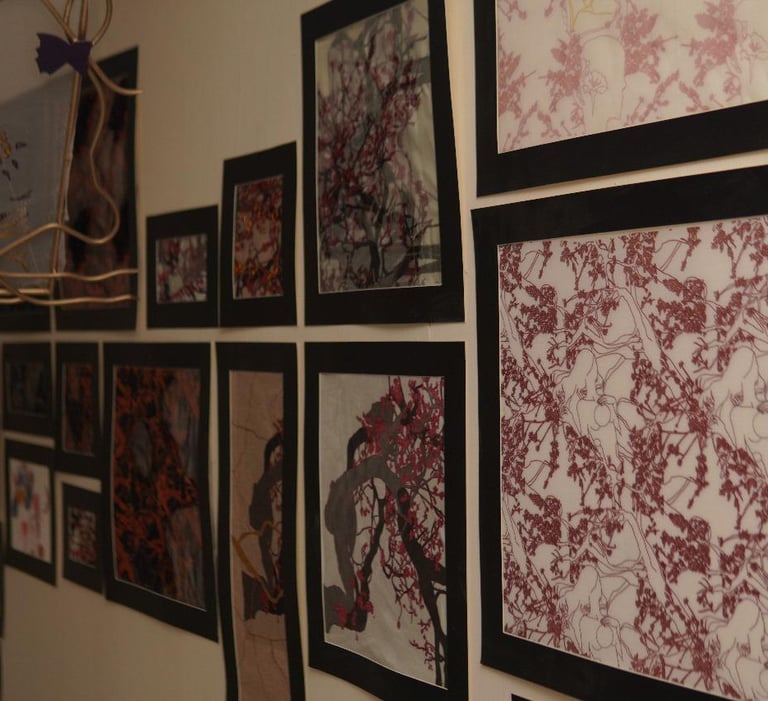
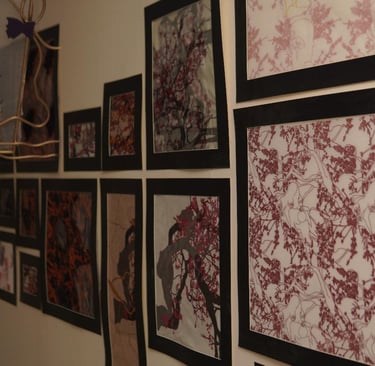
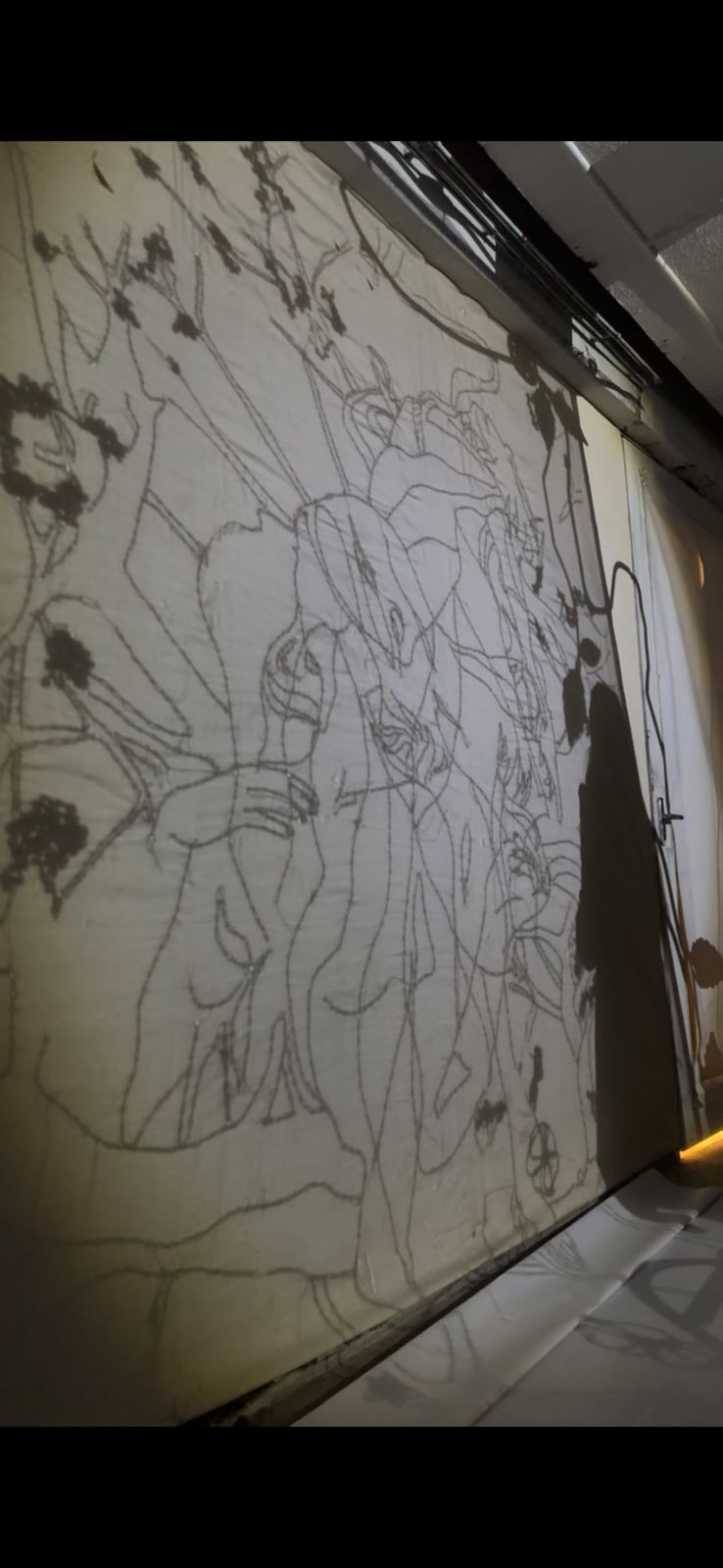
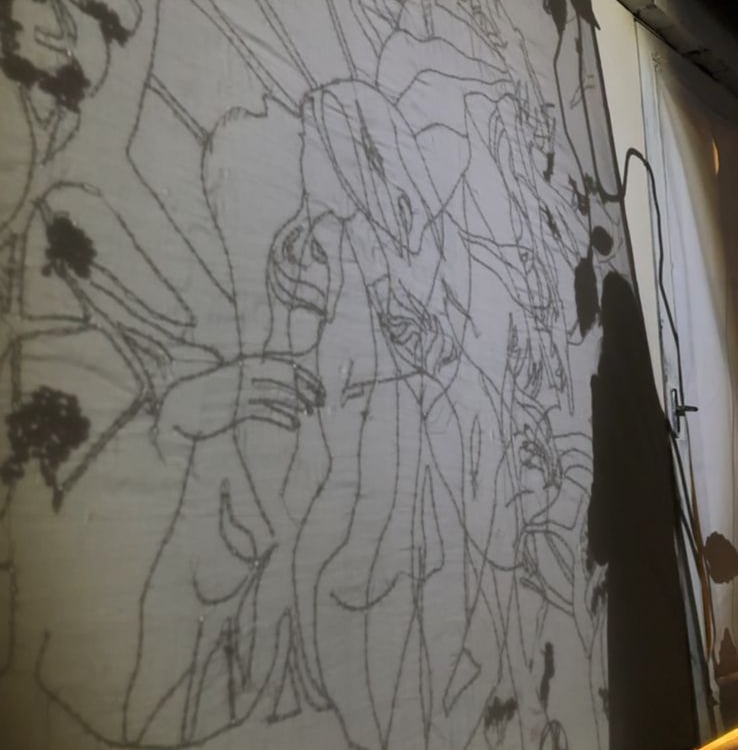
She believed her purpose was to make others whole.
So she gave and gave—
pieces of her time,
her energy,
her identity.
Until there was nothing left..
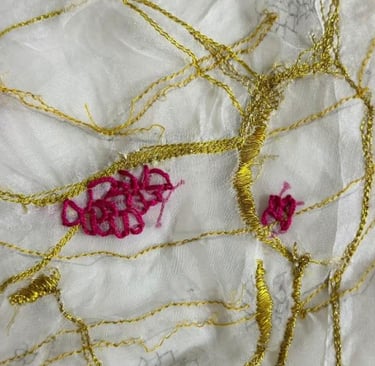
She became quiet.
Fragmented.
Hollow.
But in that emptiness…
she finally saw herself.
Not as broken—
but as unfinished.
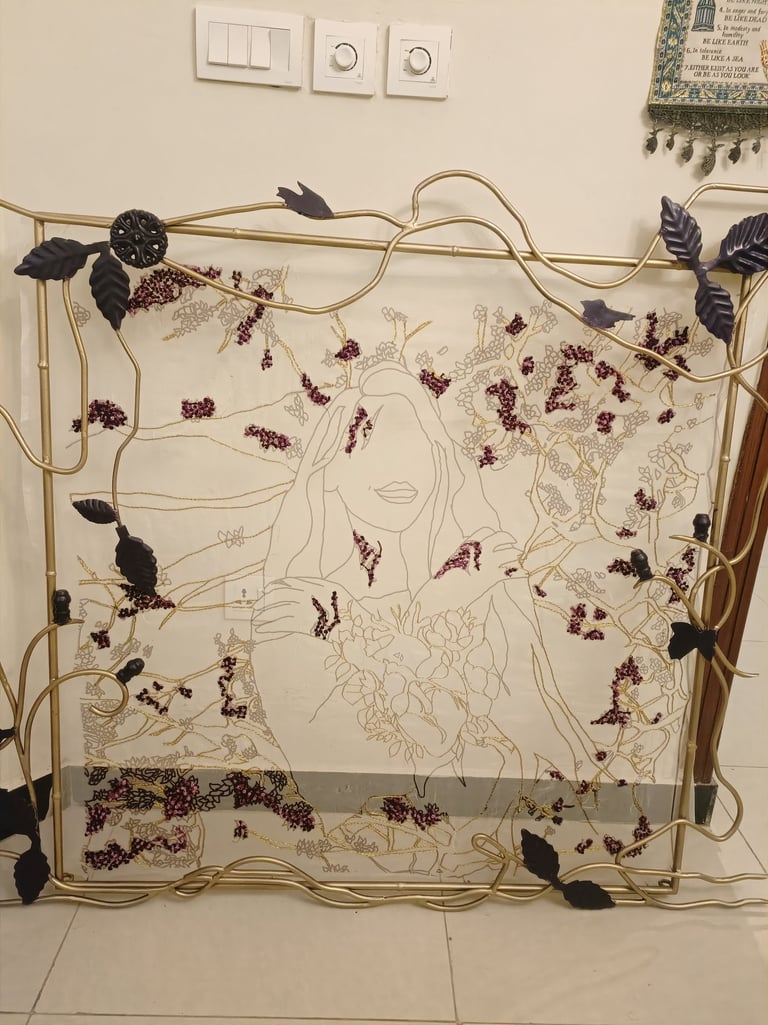
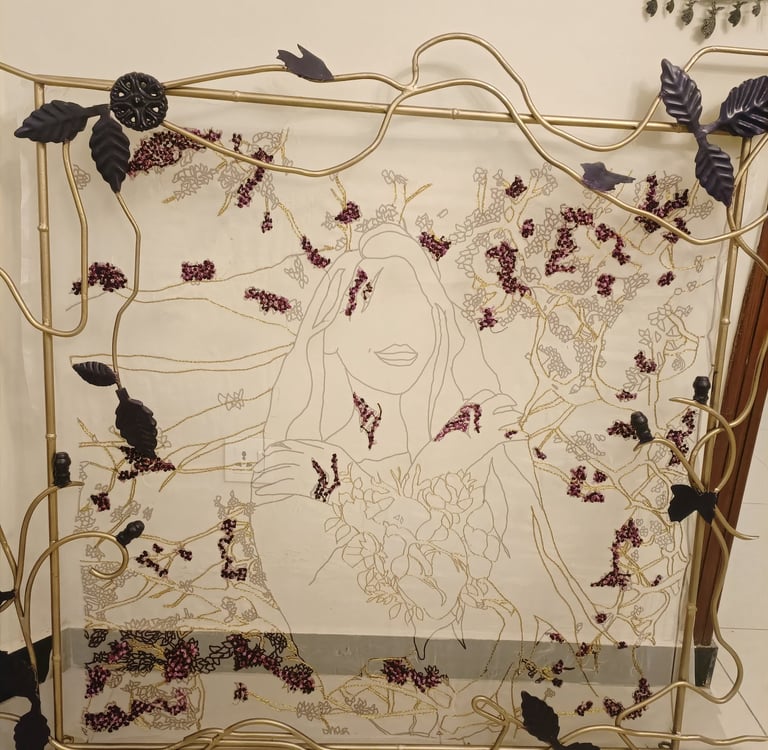


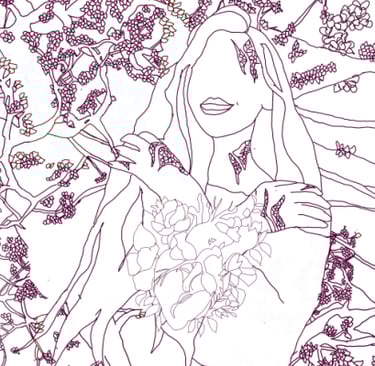
And slowly,
she began to return.
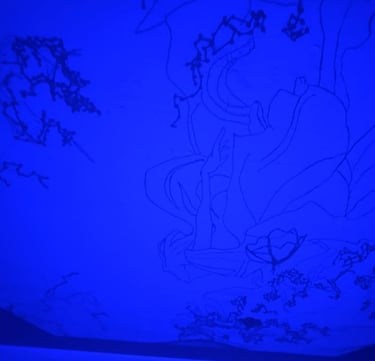
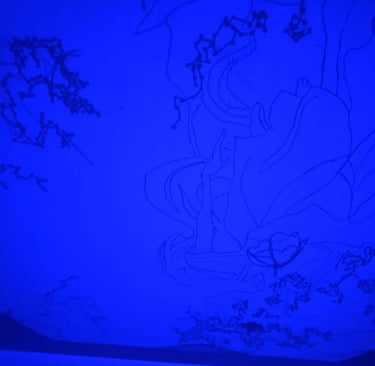
The flowers begin to bloom.
System Development
A system was developed to guide how emotion translates into form and space.
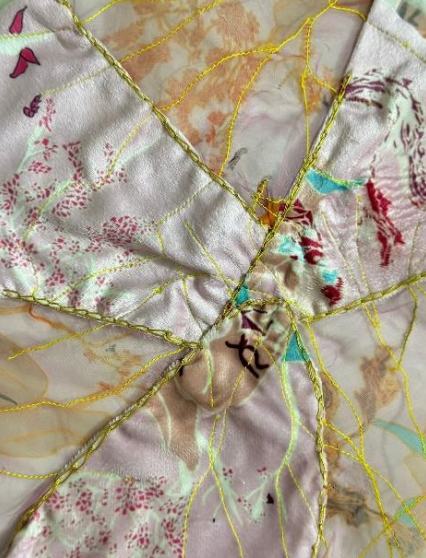
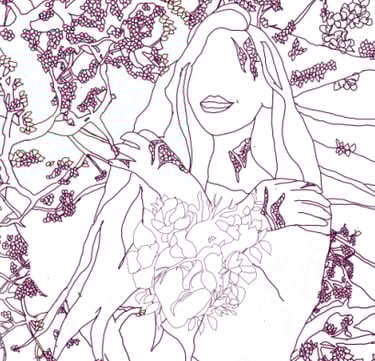
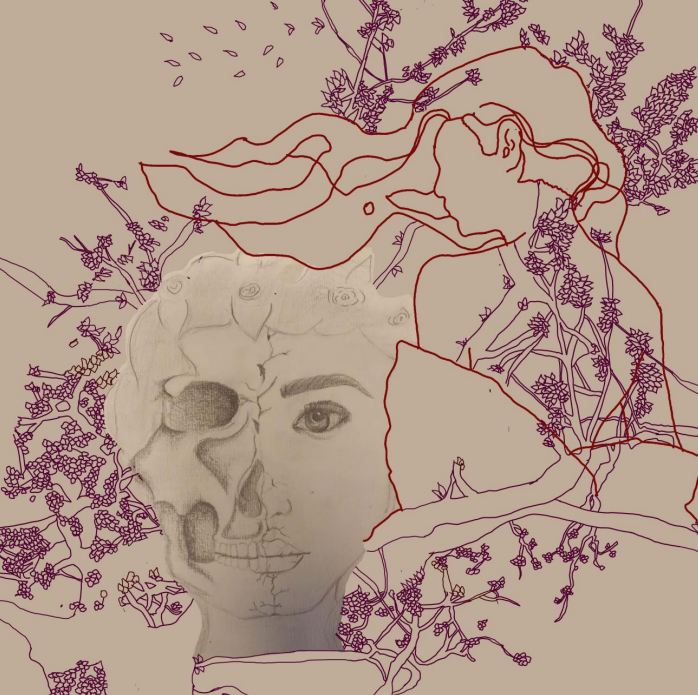
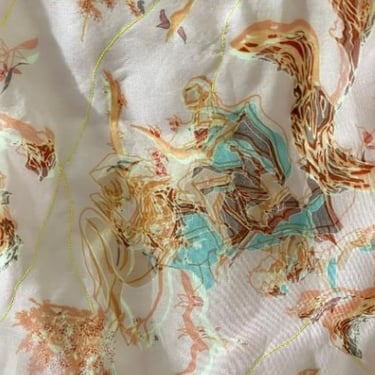
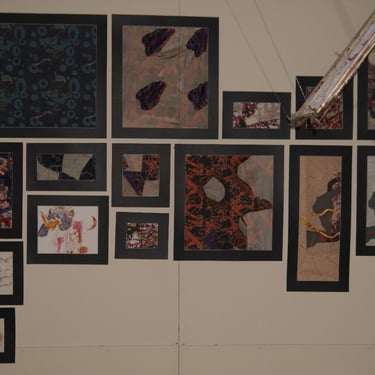
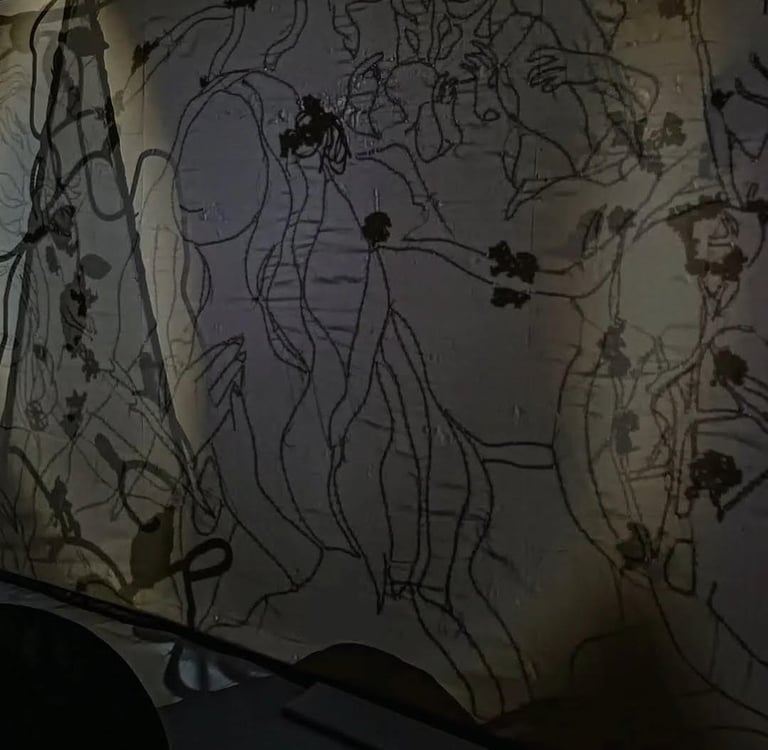
Fragmentation was expressed through broken lines and disrupted compositions.
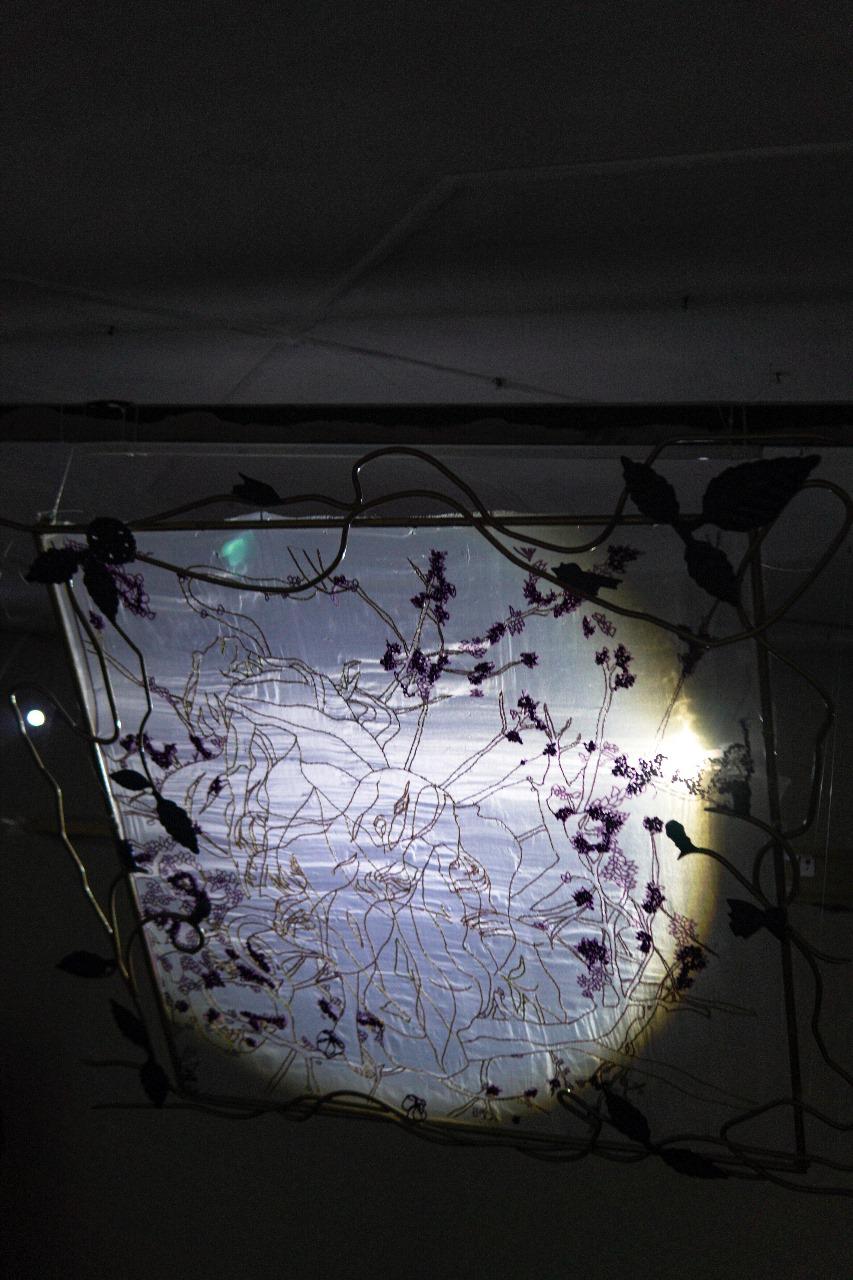
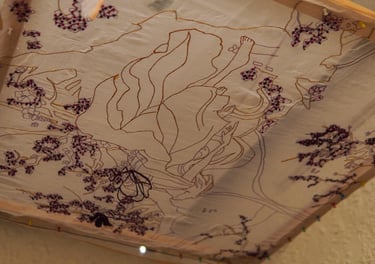
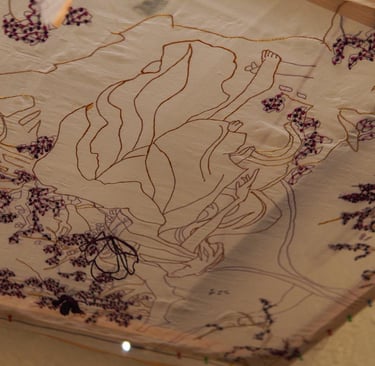
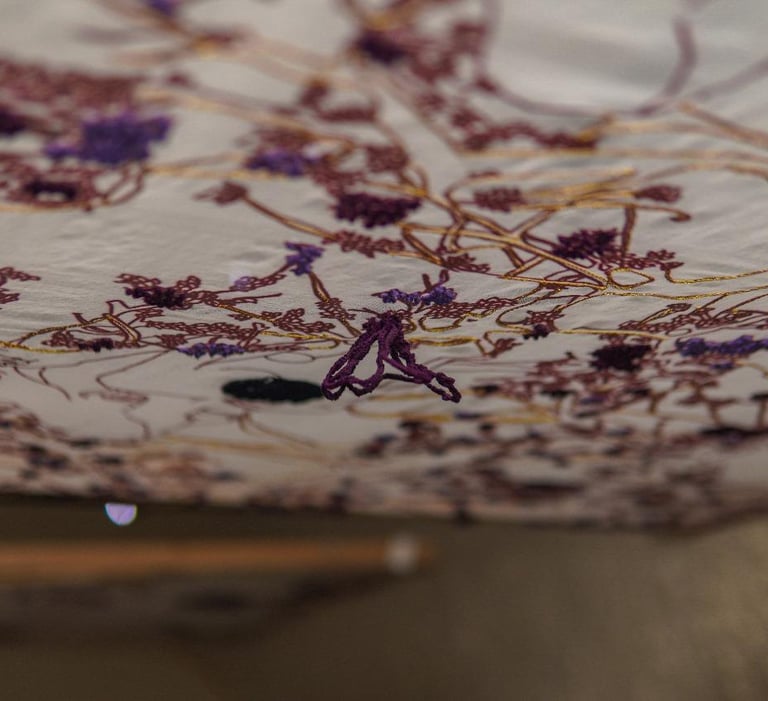
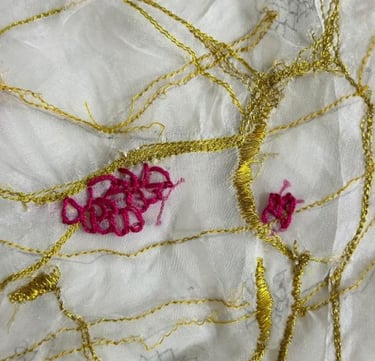
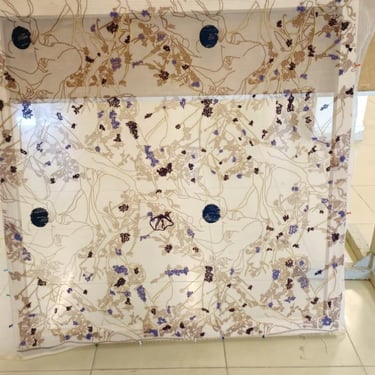
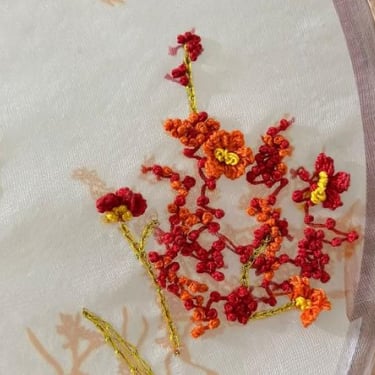
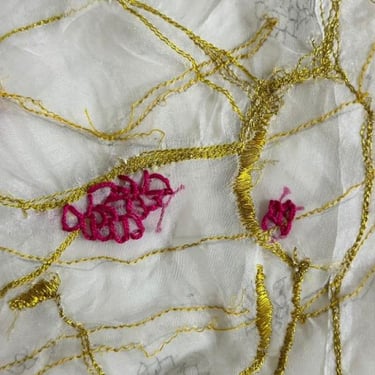
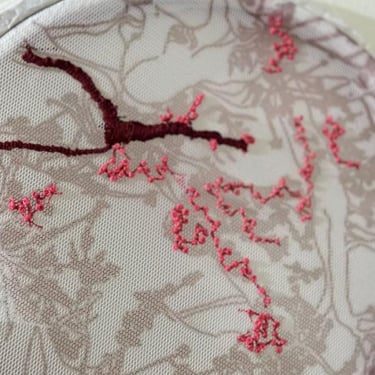
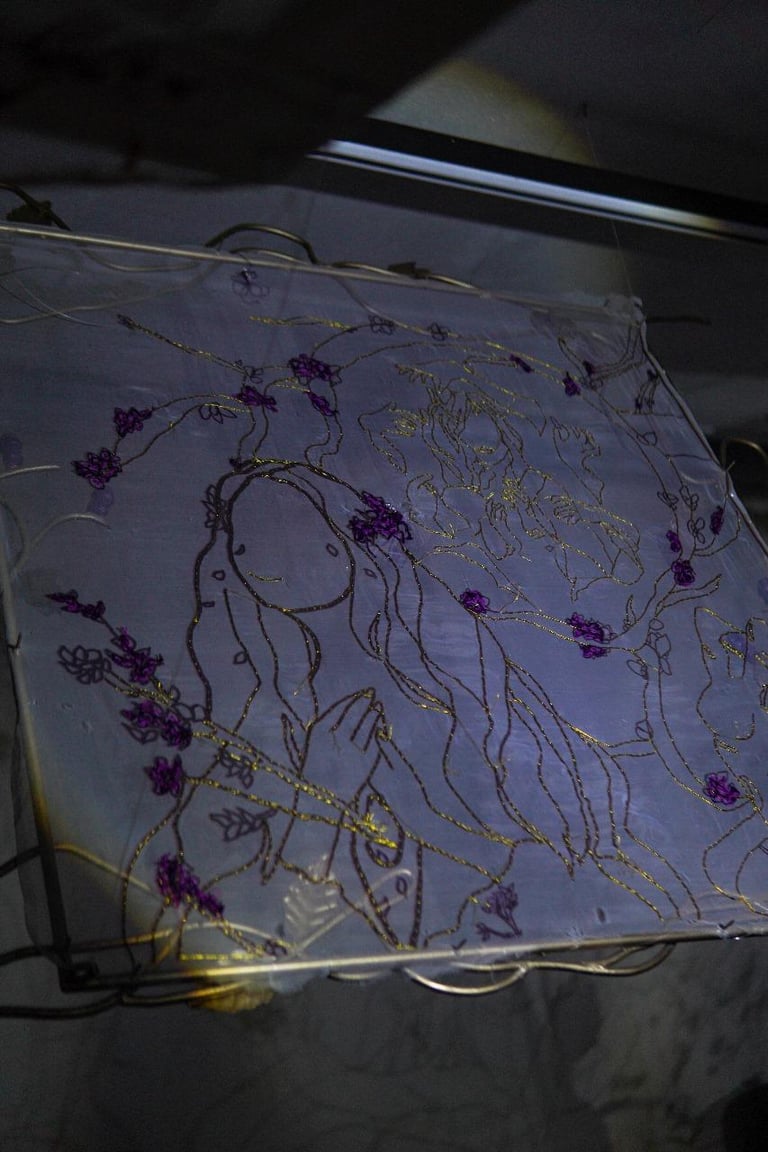
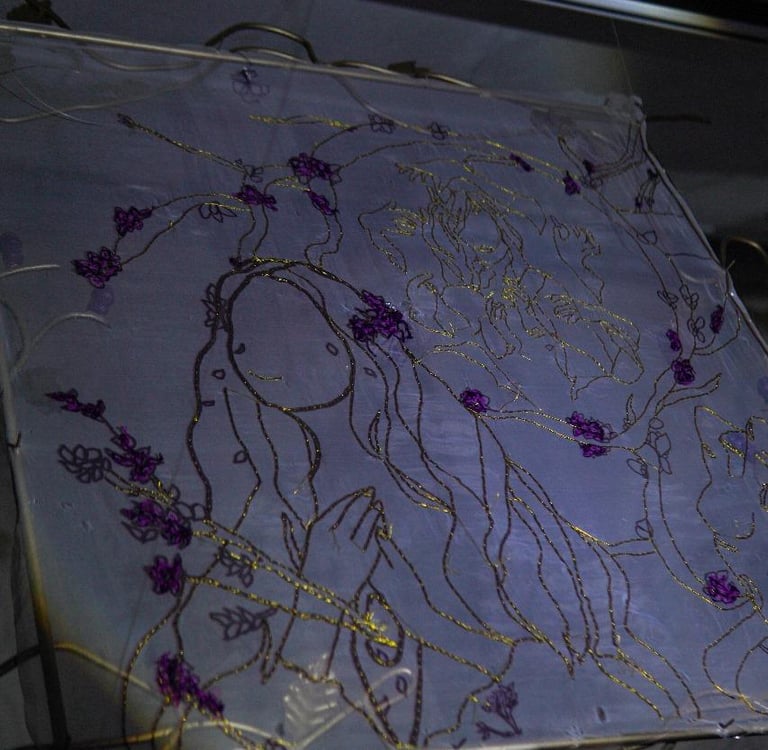
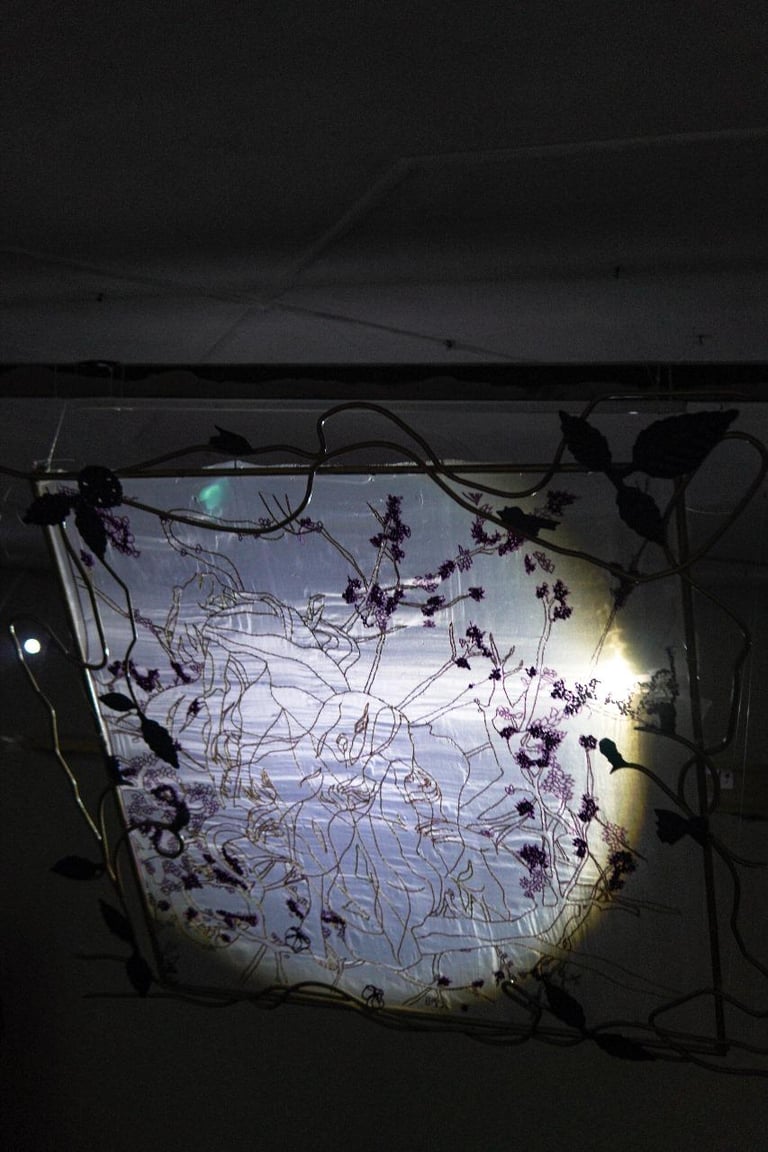
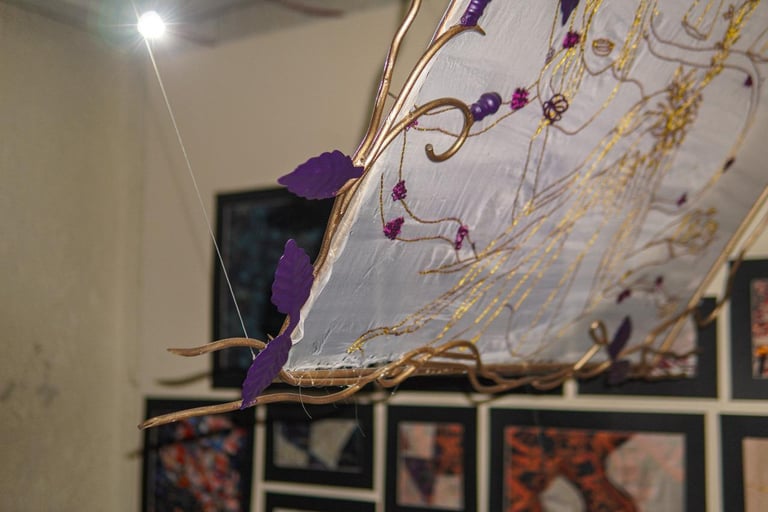
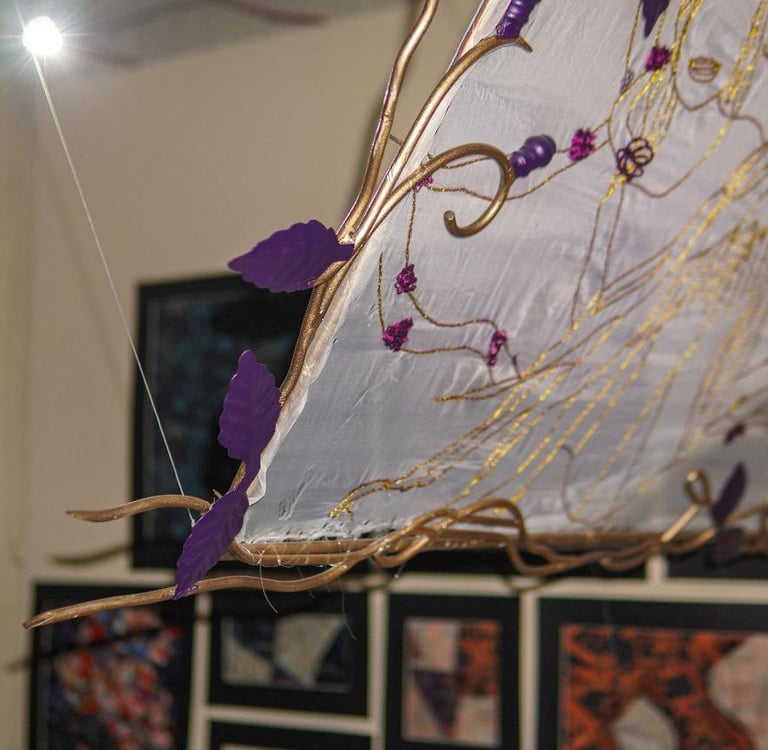
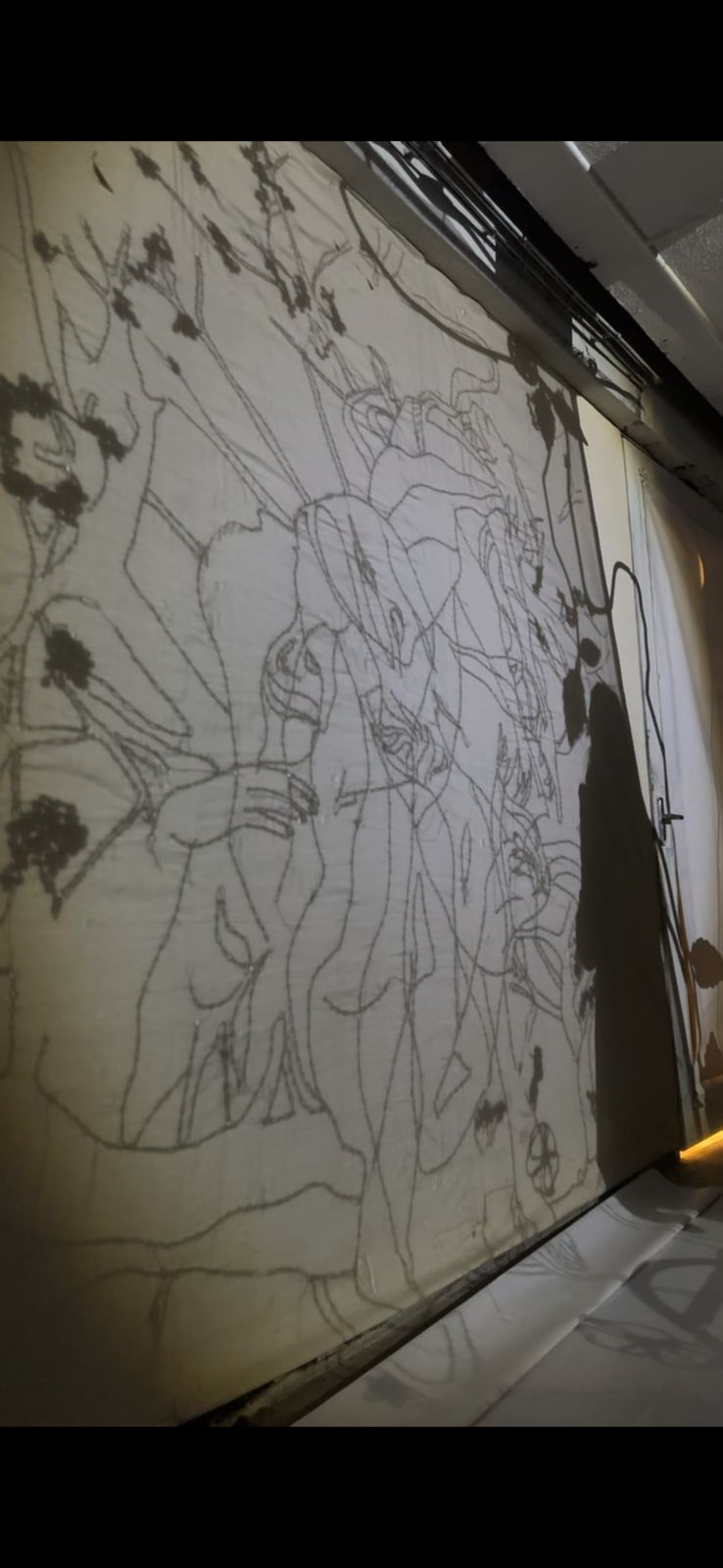
Healing was represented through repair—using embroidery and gold thread inspired by Kintsugi.
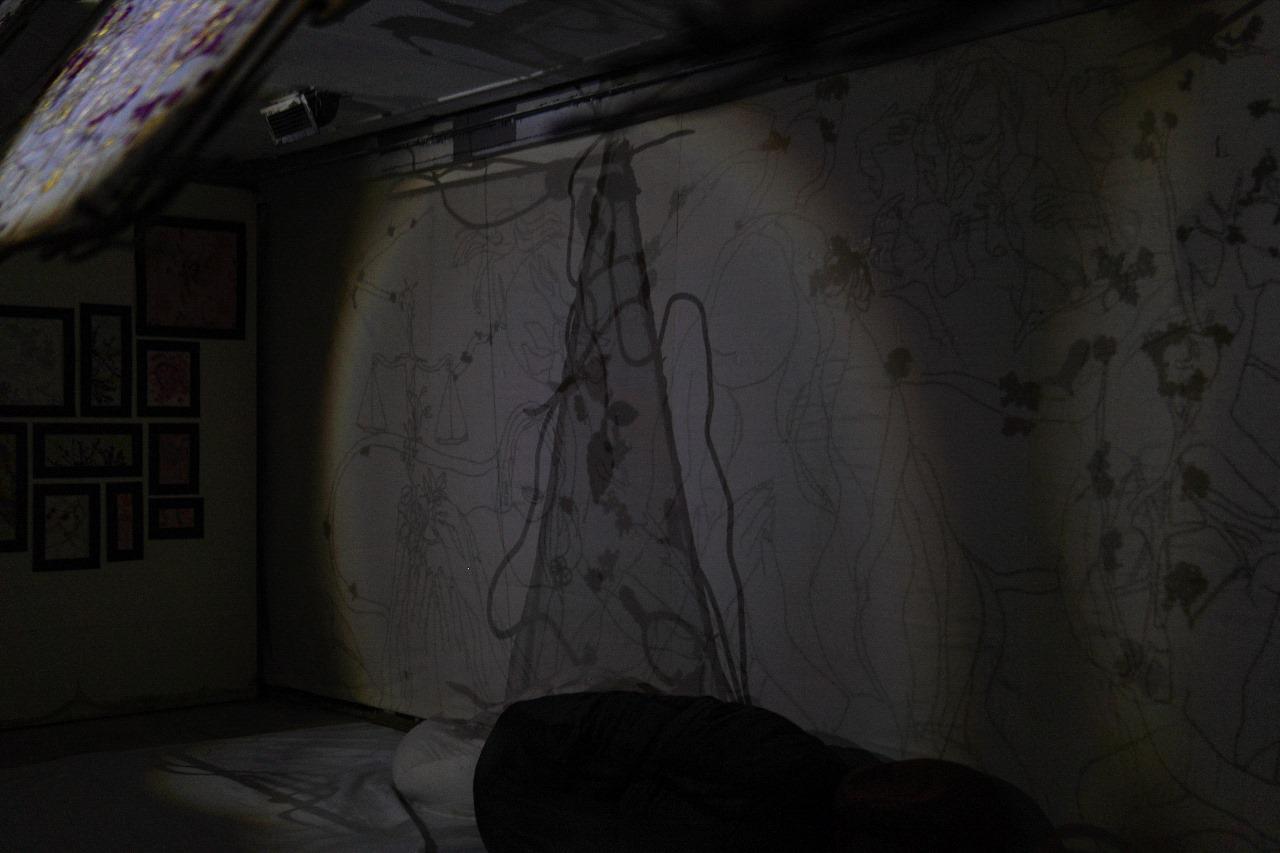
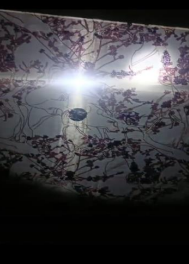
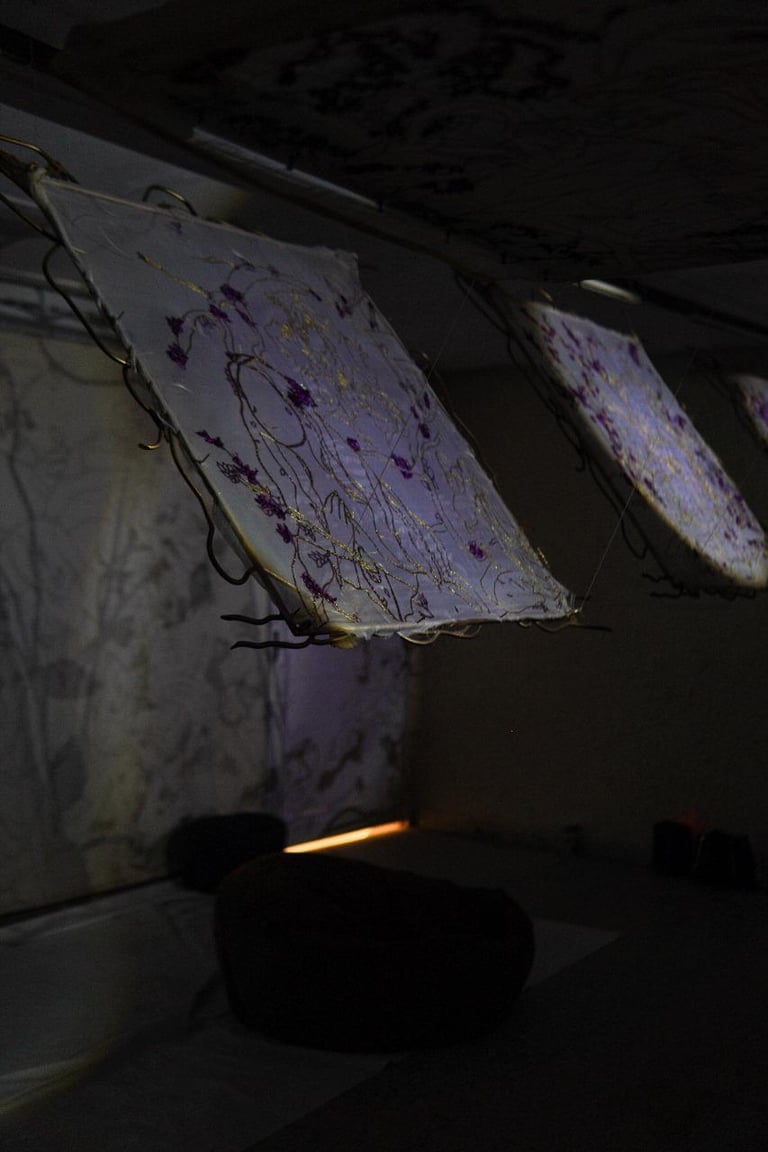
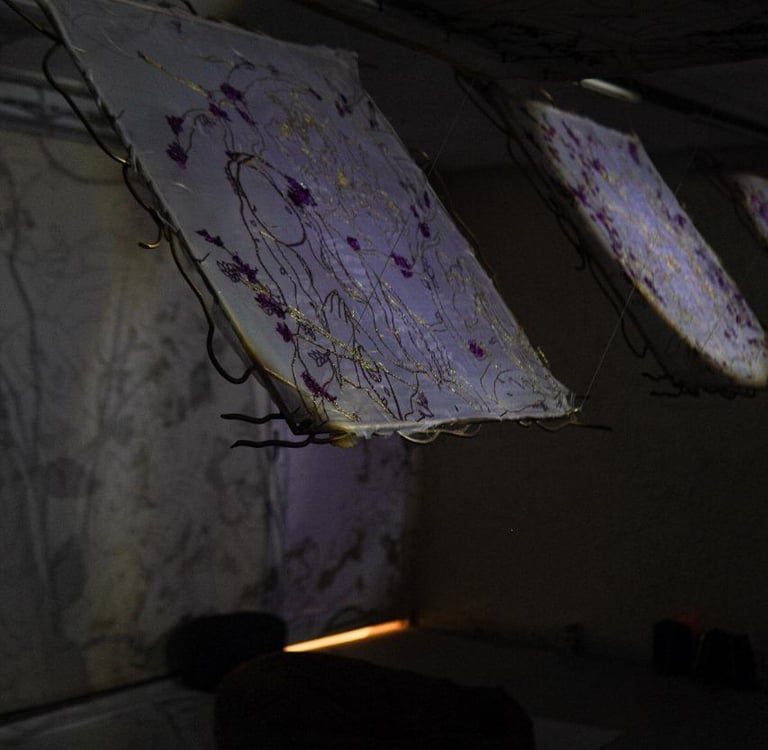
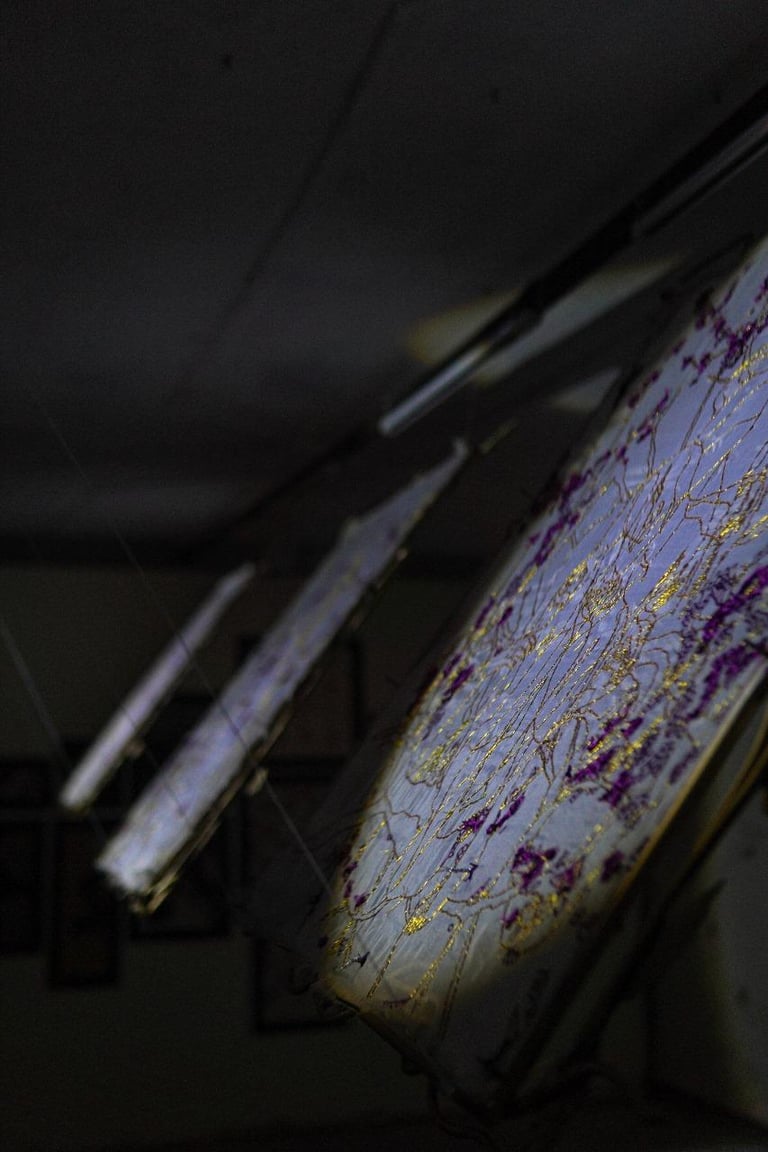
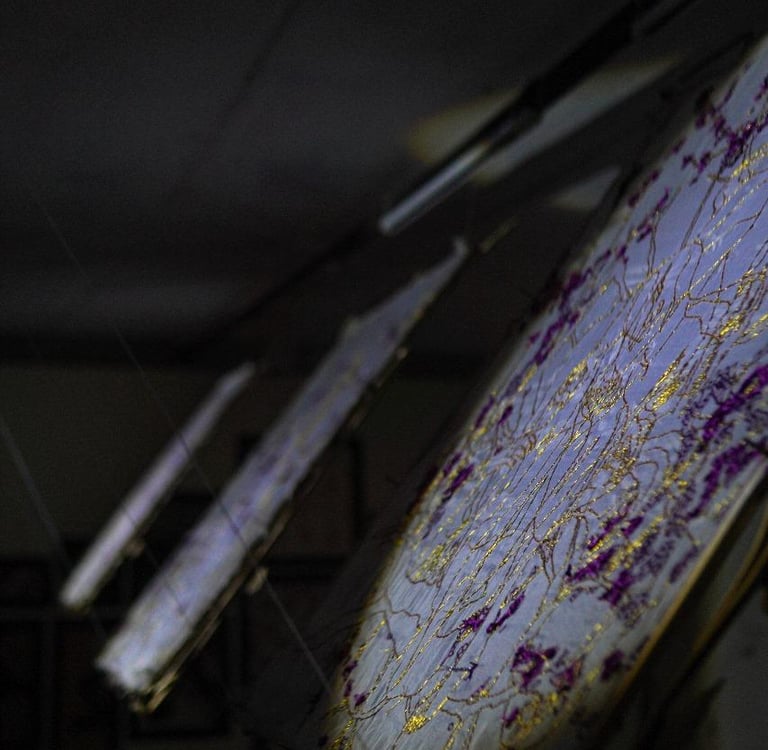
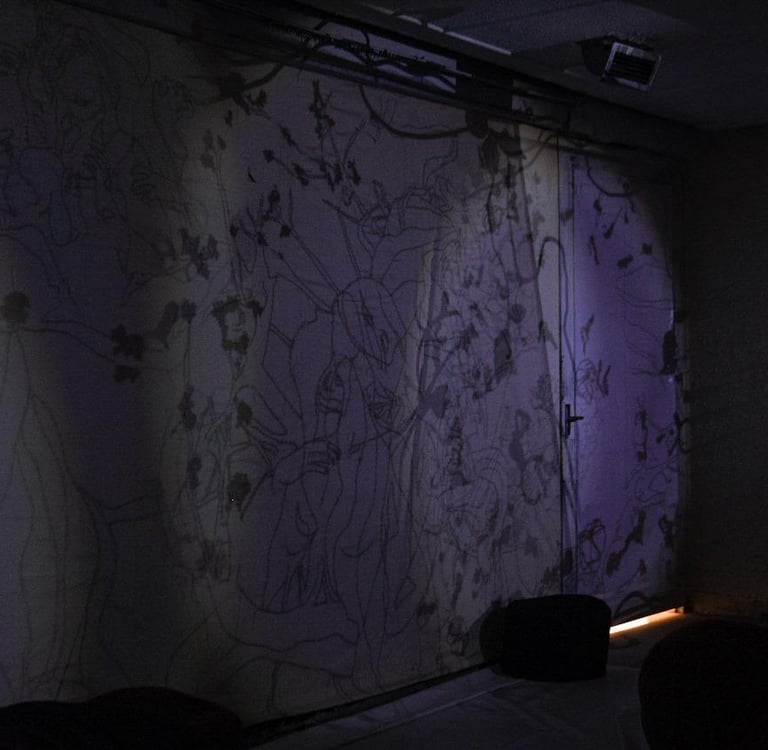
Light and shadow acted as a dynamic layer, continuously reshaping the work and allowing the experience to evolve based on viewer movement.
This system ensured that the project remained consistent in concept while allowing for variation in expression.
Light & Shadow Interaction
Form & Line Translation
Material Fragmentation & Repair
PROCESS
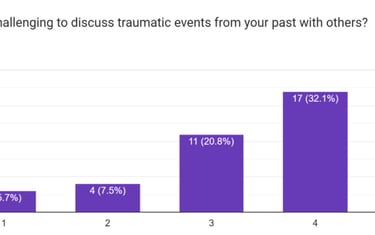
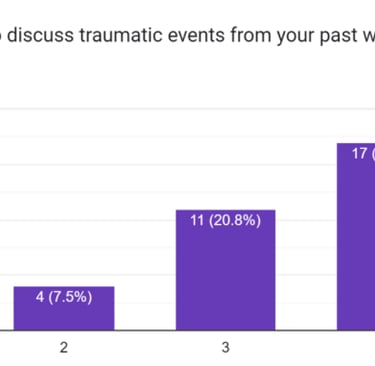
The project began with research into emotional suppression and societal expectations, particularly how individuals internalize the need to appear “whole.”
This was supported through qualitative and quantitative insights gathered from surveys and interviews, reinforcing the need for environments that allow individuals to reflect, feel, and reconnect with themselves.
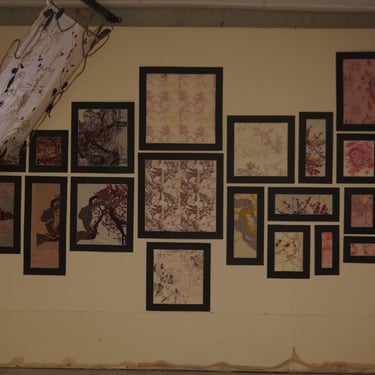
Early explorations involved translating emotional states into visual fragments—through sketches, line work, and symbolic forms.
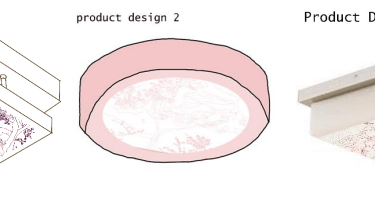
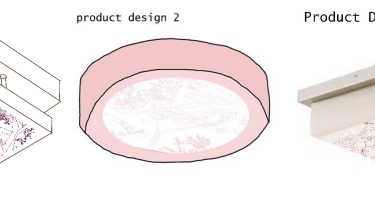
Material experimentation focused on layering textiles, embroidery, and transparency to create depth and vulnerability. Light was introduced as a dynamic element, allowing shadows to distort and reshape the work in real time.
Through iterative testing, the project evolved into a spatial system where material, light, and shadow interact—transforming static visuals into an immersive emotional experience.


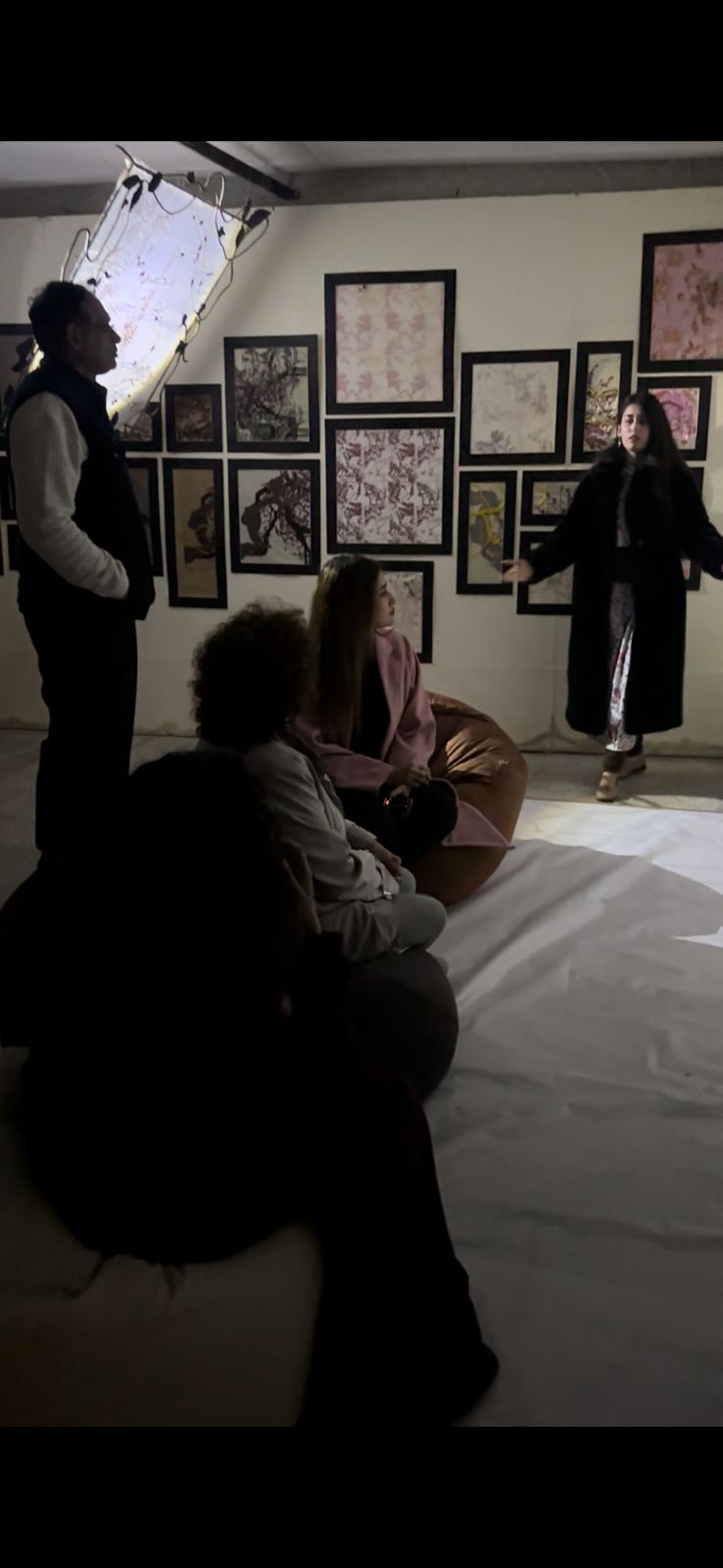
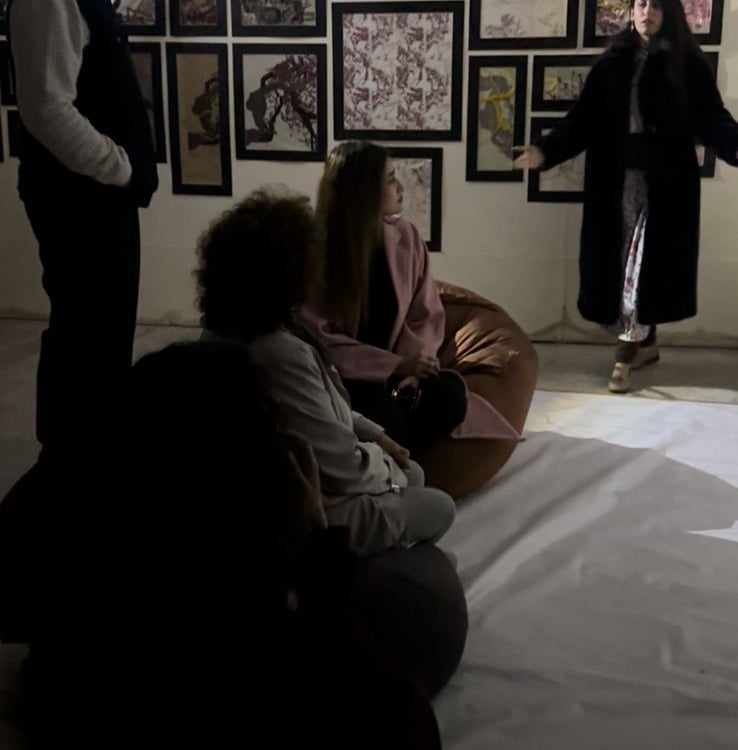
INSTALLATION
This is not meant to be viewed.
It is meant to be felt.
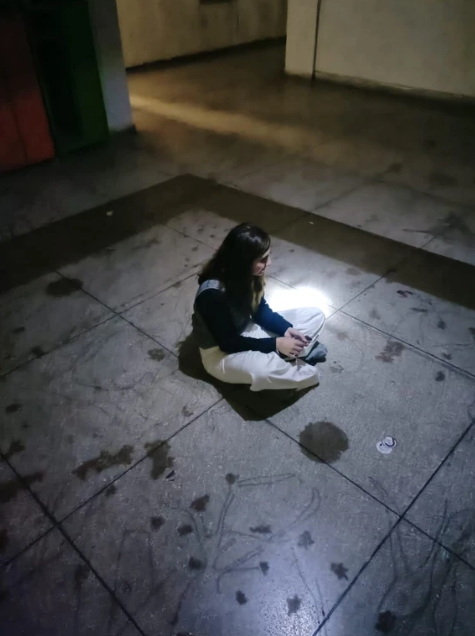
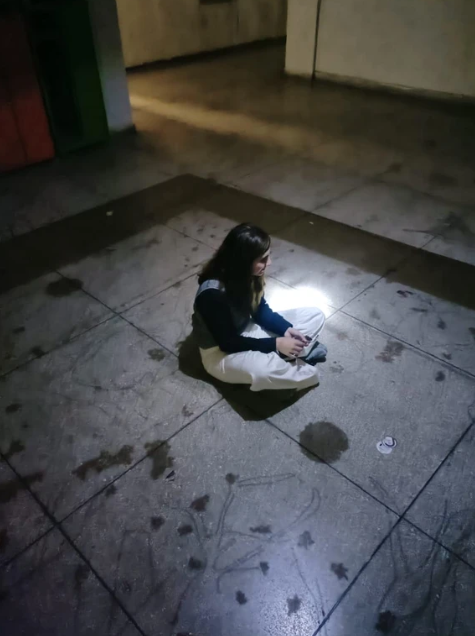
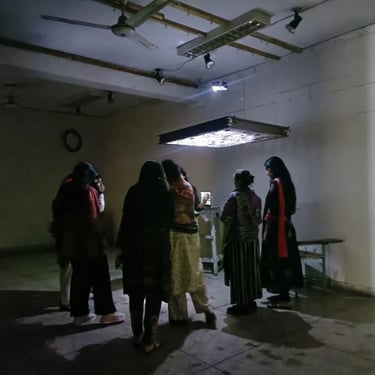
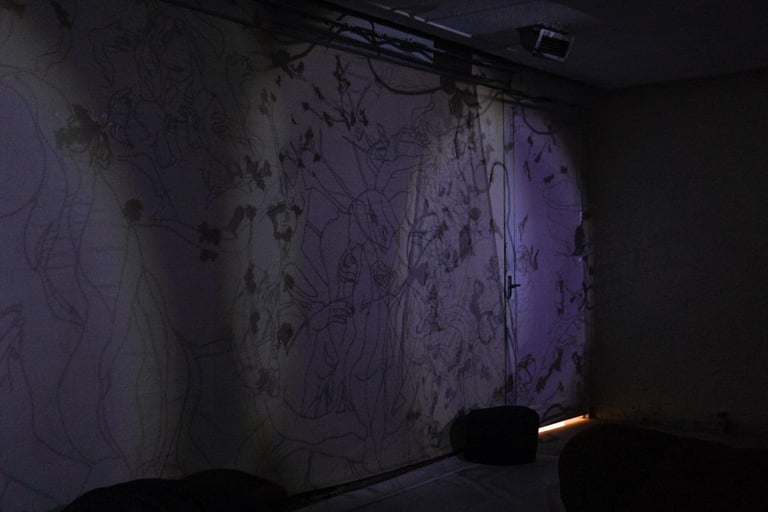
The viewer becomes an active participant within the system, where perception shifts with movement and time.
As viewers sit within the space, surrounded by light, shadow, and sound,
they become part of the story.
IMPACT
Participants reported feelings of calmness, reflection, and acceptance.
The shifting shadows allowed them to see themselves within the work—
transforming observation into experience.
The project demonstrates how design can move beyond functionality to become a tool for emotional awareness and healing.
You are not broken.
You are becoming.