
UNFOLD
A Space to Express What Words Can’t
A digital canvas for emotional release, combining drawing, reflection, and memory into one continuous experience.
THE IDEA
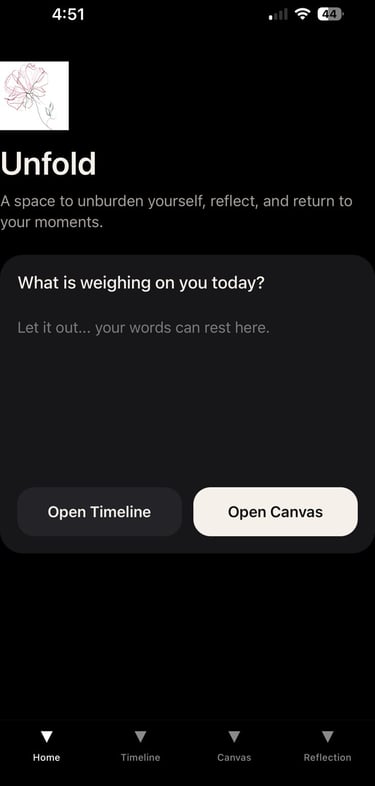
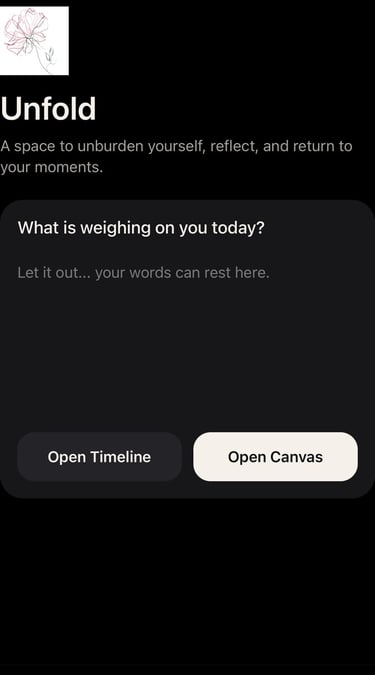
Many emotions cannot be articulated through language. Unfold was designed as a space where users can externalize feelings visually rather than verbally.
THE PROBLEM
Traditional journaling relies on words, which can create a barrier to emotional expression. Creative tools allow freedom, but lack structure for reflection.
THE SOLUTION
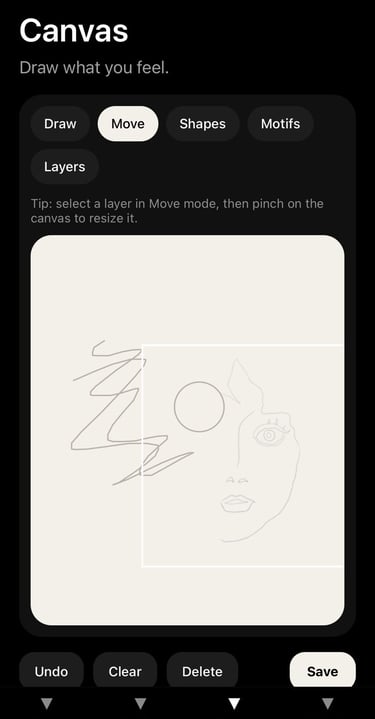
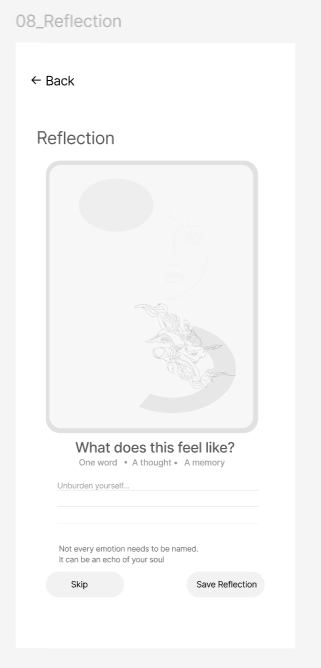
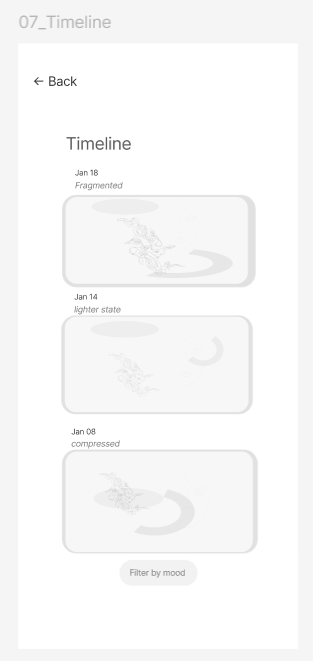
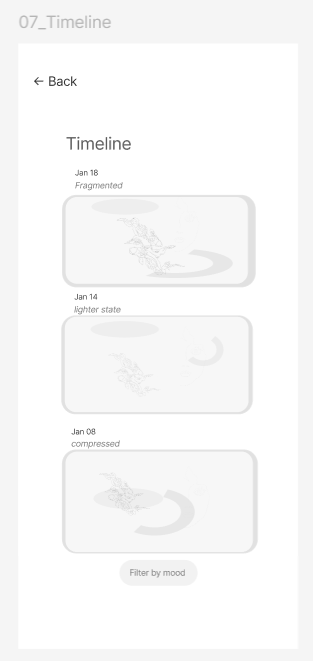
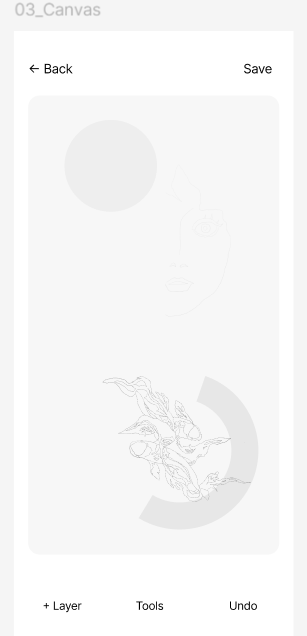
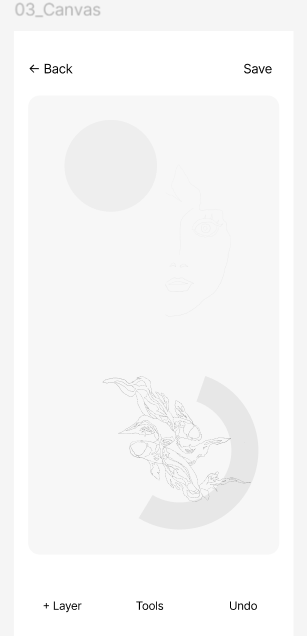
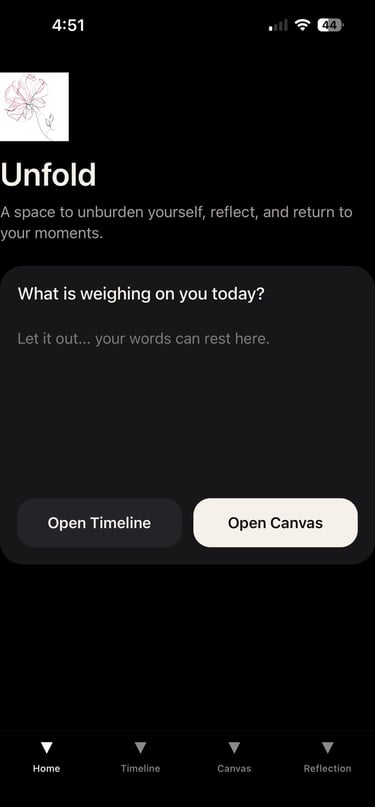
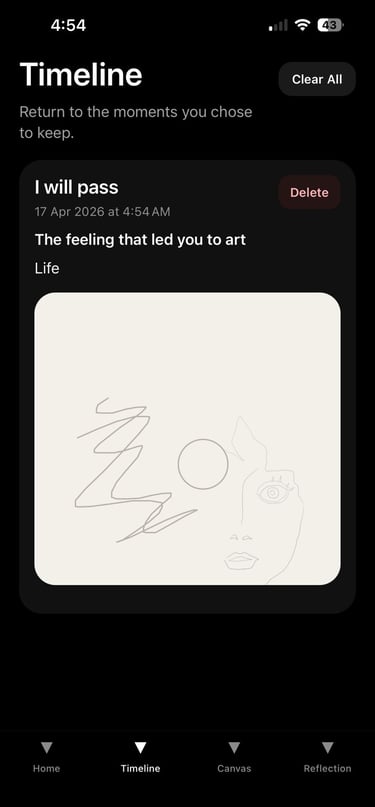
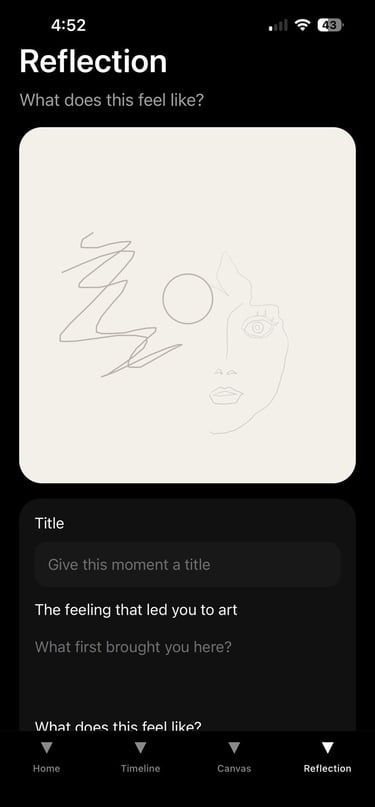
Unfold combines a gesture-based canvas, layered expression system, reflection prompts, and a timeline to create a complete emotional experience.
Early Exploration
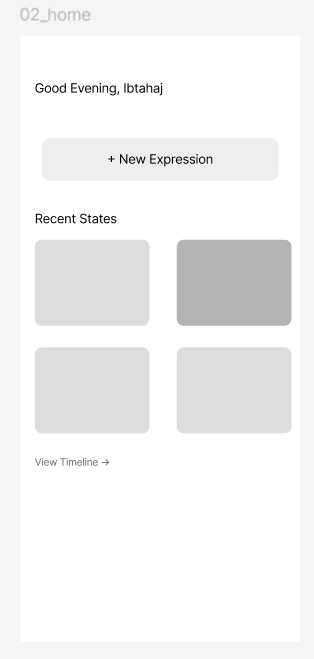
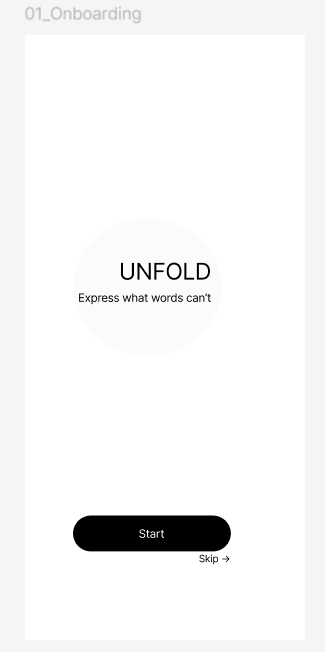
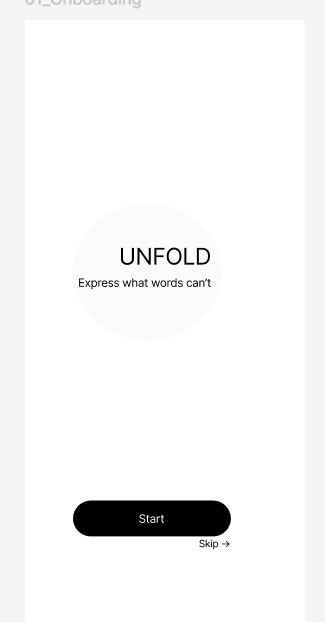
Initial designs focused on minimal, calming interfaces that encourage emotional safety and intuitive interaction.
DESIGN EXPLORATION (FIGMA)
Resolving Gesture Conflicts
Early designs relied on gestures alone, which created difficulty when selecting overlapping elements
Introducing a Layer System
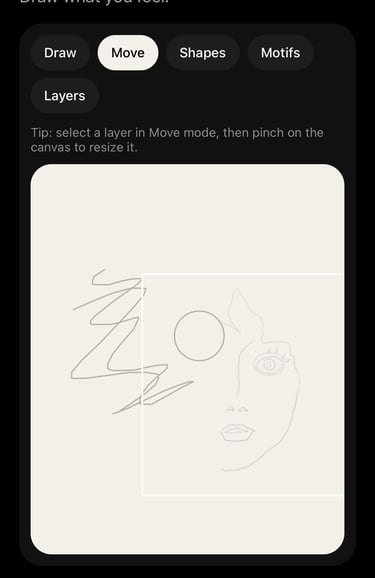
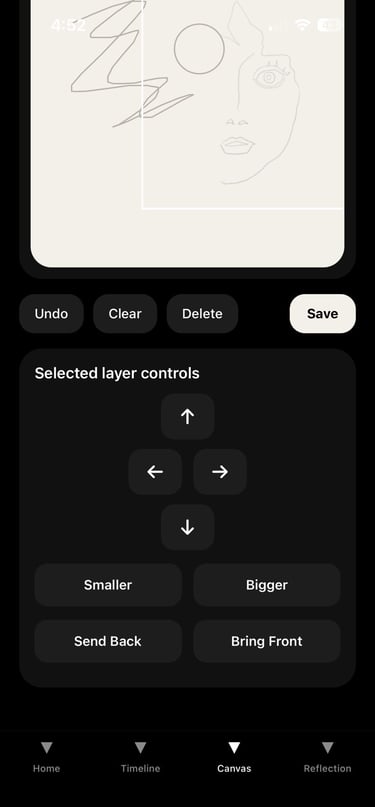
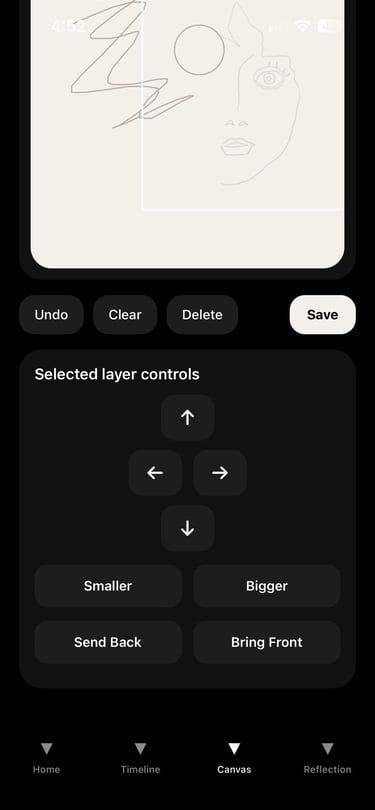
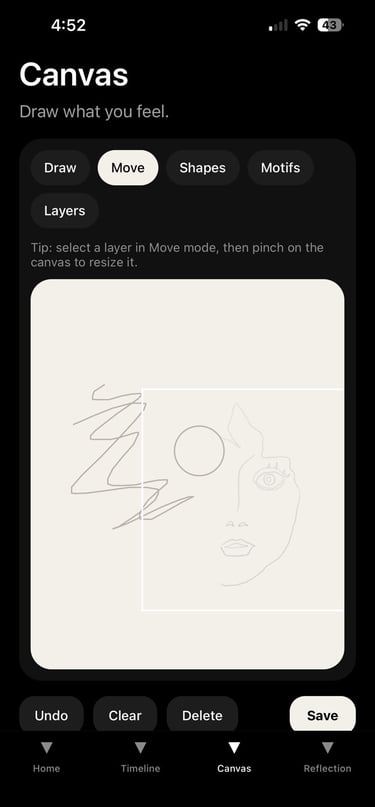
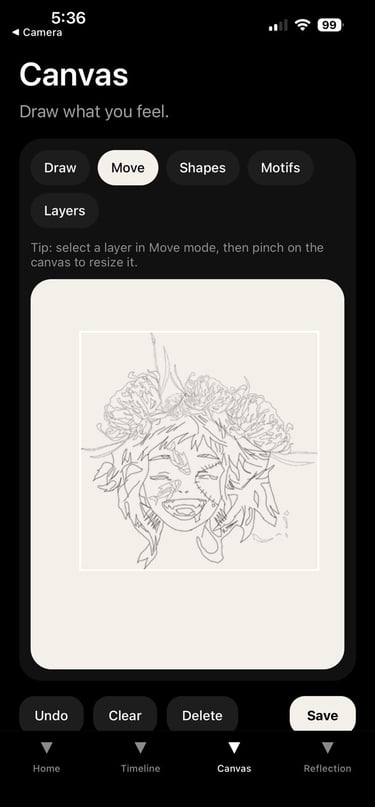
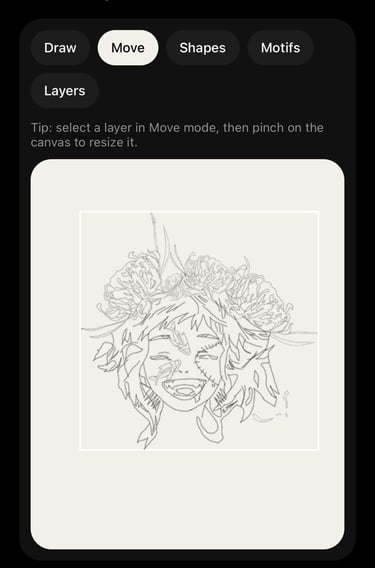
To improve precision, a layer system was introduced, allowing users to select, move, reorder, and edit elements independently.
Designing an Emotional Flow
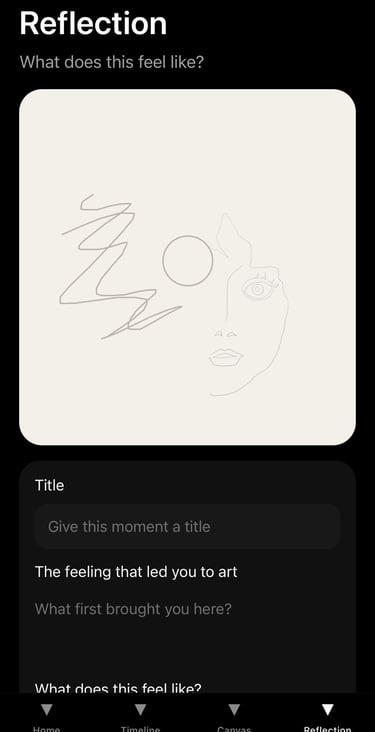
The experience was restructured into a continuous journey:
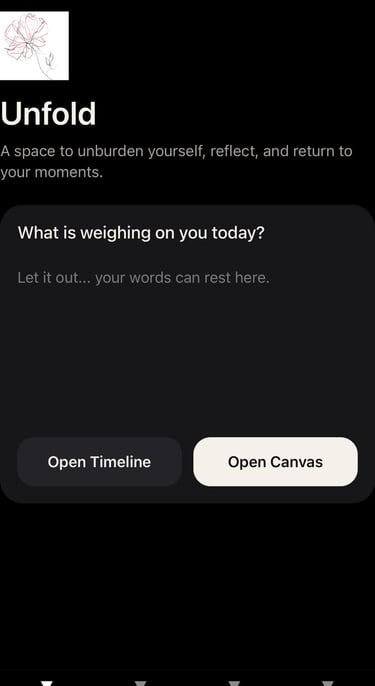
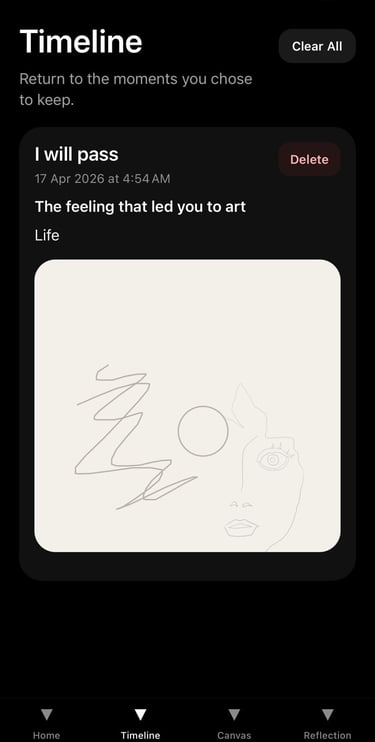
Home → Canvas → Reflection → Timeline
Designing for Emotional Safety
Personalization elements were removed to preserve anonymity, allowing users to express themselves freely without identity pressure.
Interaction Design
Drag to move elements
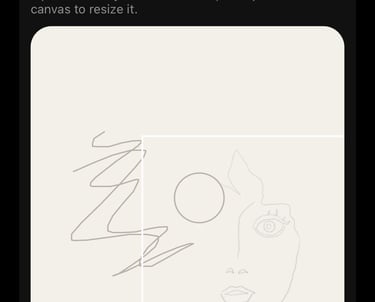
Pinch to resize layers
Layer-based selection system
Freehand + structured motifs
Timeline-based memory tracking
OUTCOME
Unfold evolved from a visual concept into a functional prototype, demonstrating how emotional expression can be supported through interaction design rather than language alone.
This project shifted my approach from interface design to emotional experience design. It reinforced the importance of clarity not just in visuals, but in how users feel while interacting with a system.