Silent Frequencies
Translating sound into a tactile language
Sound exists as vibration—intangible, fleeting, and unseen.
This project explores how these invisible frequencies can be translated into physical form through textiles.
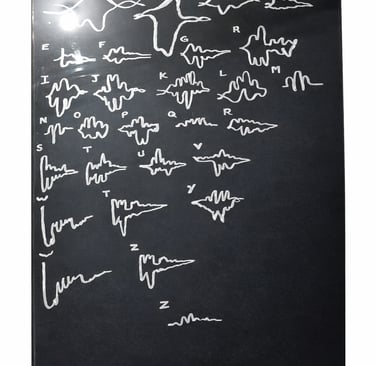
Each letter was analyzed through its sound wave, then reinterpreted into a unique weaving structure. These structures form a visual language—one that replaces written symbols with rhythm, density, and movement.
Through material exploration and weaving techniques, sound is transformed into something that can be seen, touched, and worn. The resulting forms embody the quiet presence of sound, turning fleeting frequencies into lasting, tactile expressions.
LANGUAGE SYSTEM
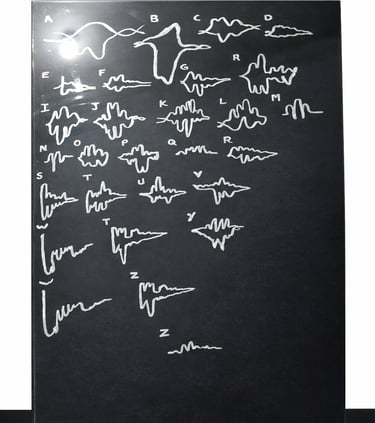
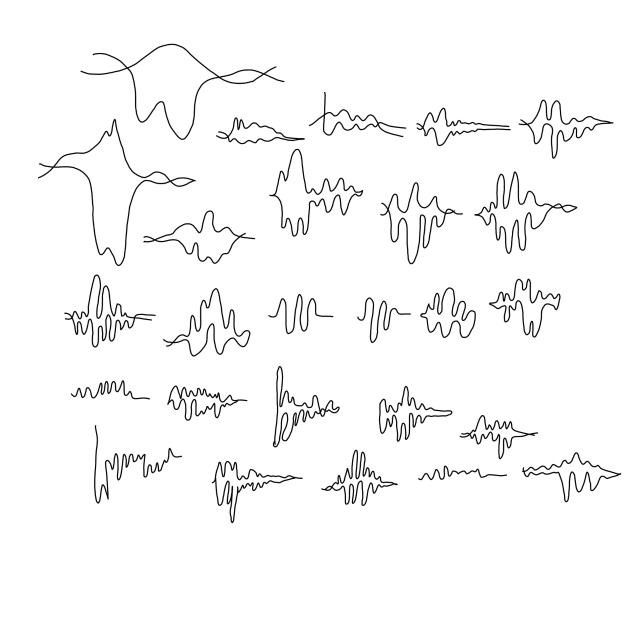
To begin, I developed a visual vocabulary derived from sound waveforms. Each waveform was simplified into a distinct mark, forming a modular alphabet that could represent both phonetic and emotional expression.
This system acts as a bridge between sound and material—translating intangible frequencies into a readable, repeatable visual language.
Translating Frequency into Material
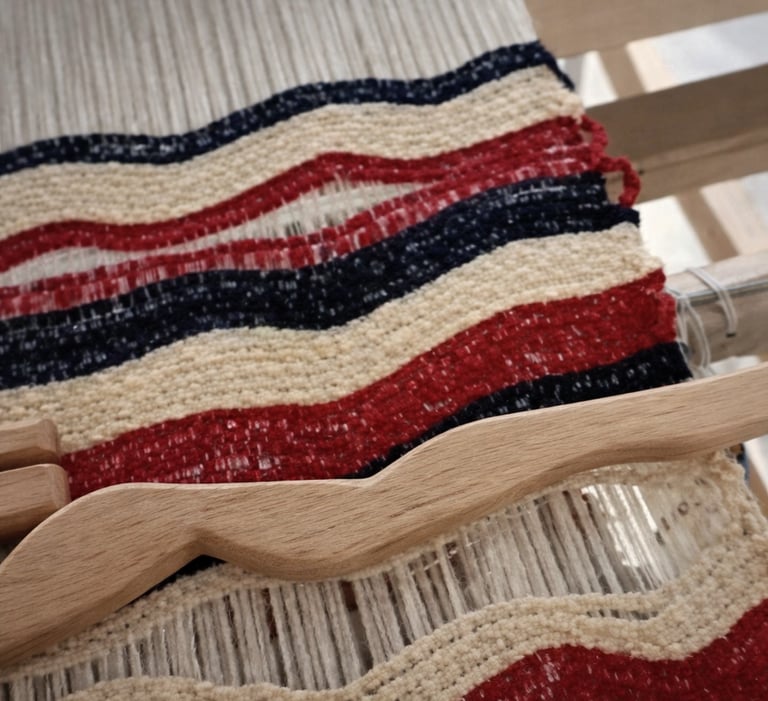
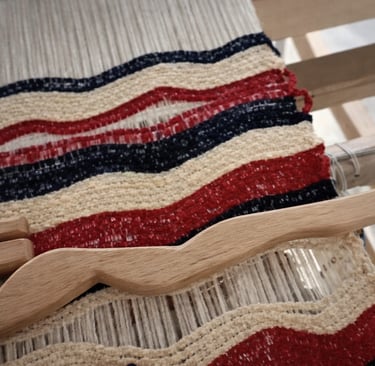
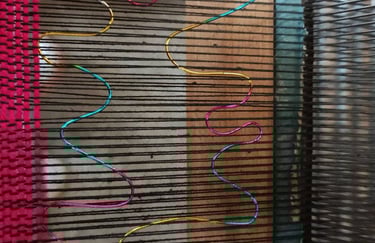
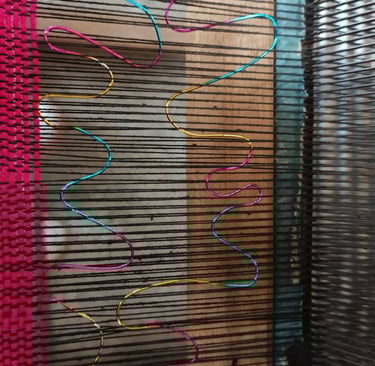
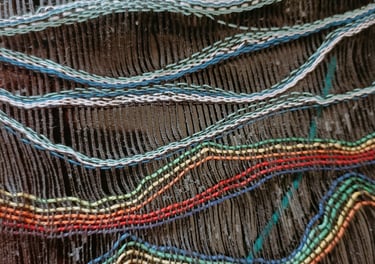
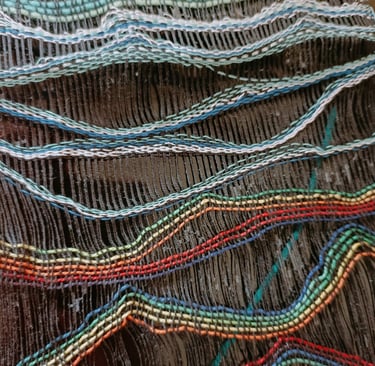
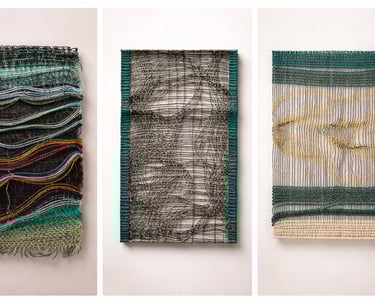
The next stage focused on material translation. Through weaving, I explored how variations in thread tension, density, and layering could mimic the behavior of sound waves.
Loose threads, compressed sections, and undulating structures were used to represent shifts in amplitude and frequency. The loom became a tool for encoding sound into physical form, allowing each textile to carry a sense of rhythm and movement.
Material Outcomes
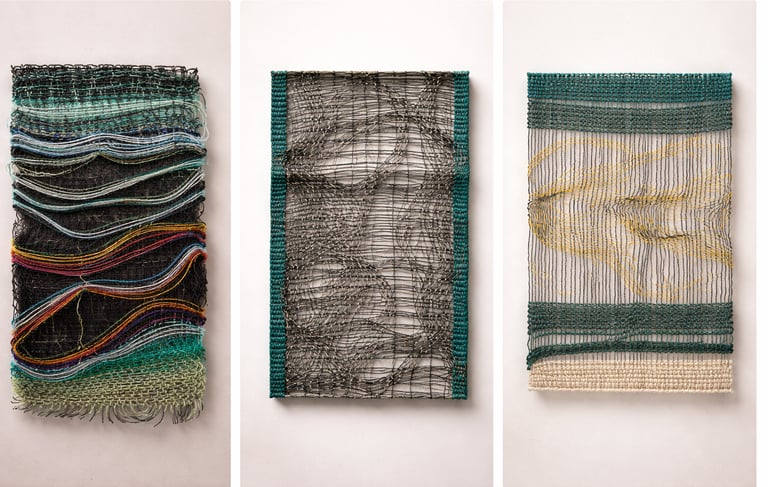
A series of textile samples were developed to test how the system behaves across different materials and structures. Each piece captures a variation of sound—some dense and controlled, others fluid and distorted.
These explorations helped refine how texture, transparency, and layering can communicate depth, intensity, and emotional tone.
From Sound to Meaning
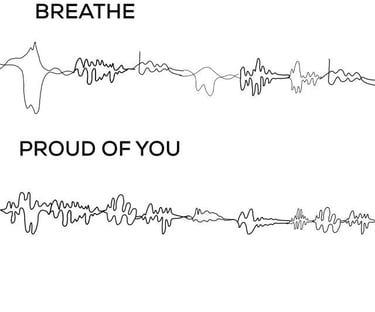
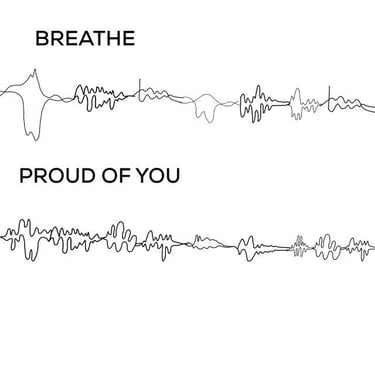
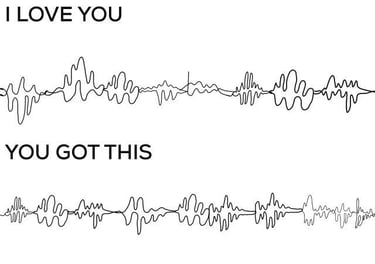
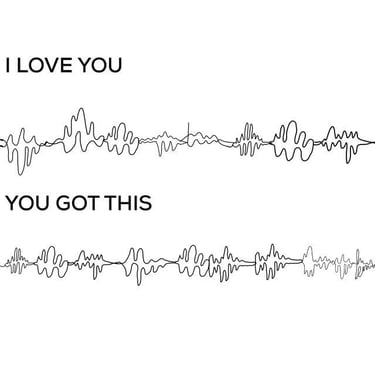
The visual language was further applied to emotional phrases such as “Breathe,” “I love you,” and “You got this.” These phrases were translated into waveform compositions, shifting the system from purely structural to expressive.
This stage highlights how sound-based forms can function as a new mode of communication—one that exists between language, emotion, and abstraction.
Final Garment
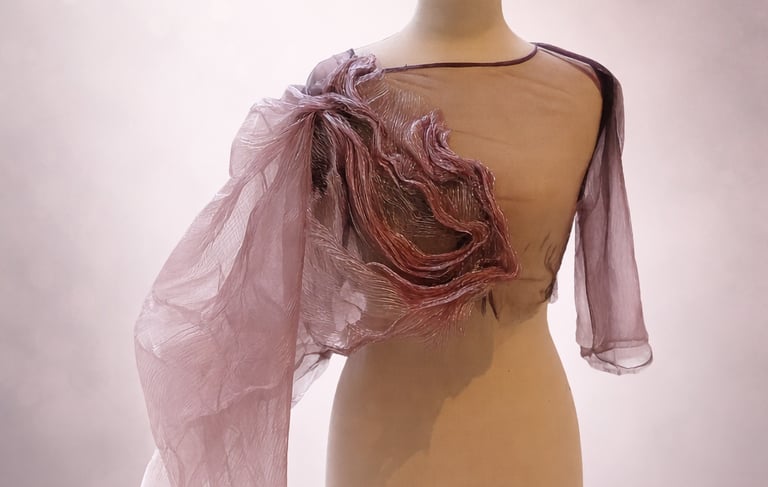
The final garment translates the developed system into a wearable form. Sculptural textile elements embody the movement of sound, wrapping around the body as physical expressions of frequency and flow.
Sheer and structured materials are combined to create contrast between softness and tension, echoing the dual nature of sound as both fluid and precise.


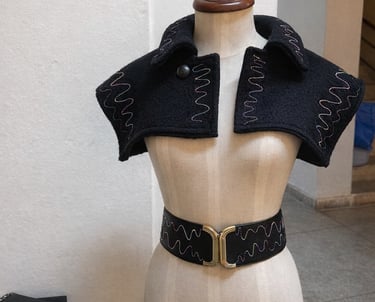
Secondary Garment Detail
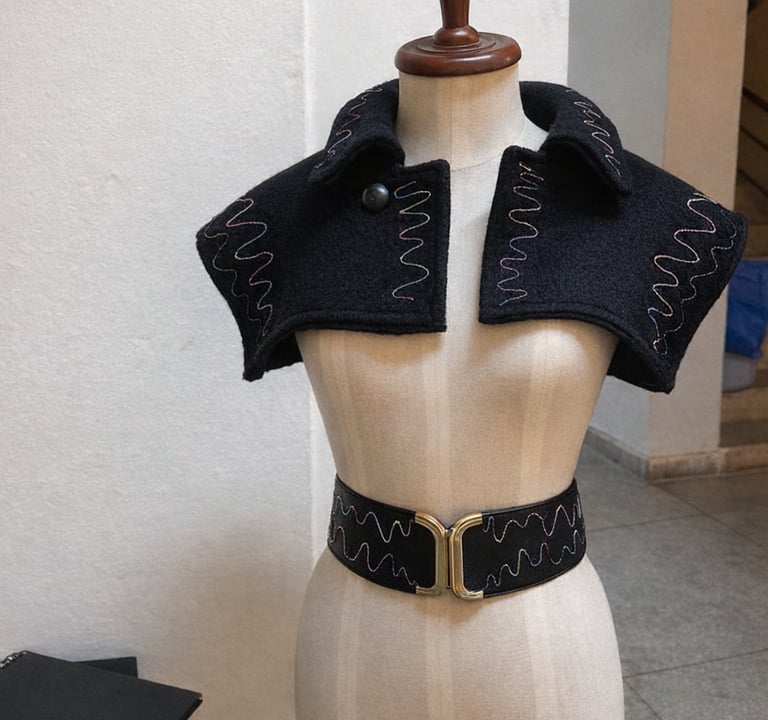
In the secondary piece, waveforms are embedded more subtly through stitched lines and surface detailing. The repetition of these forms creates a continuous visual rhythm, allowing the language to exist quietly within the garment.
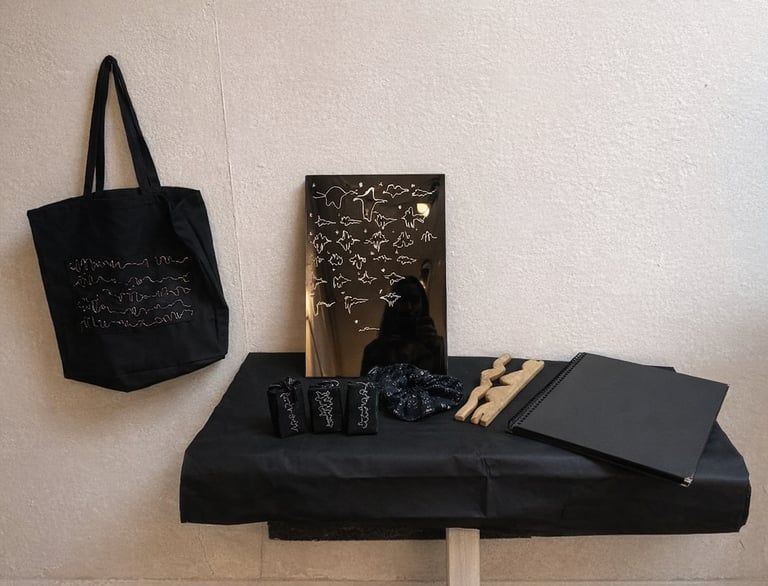
Installation
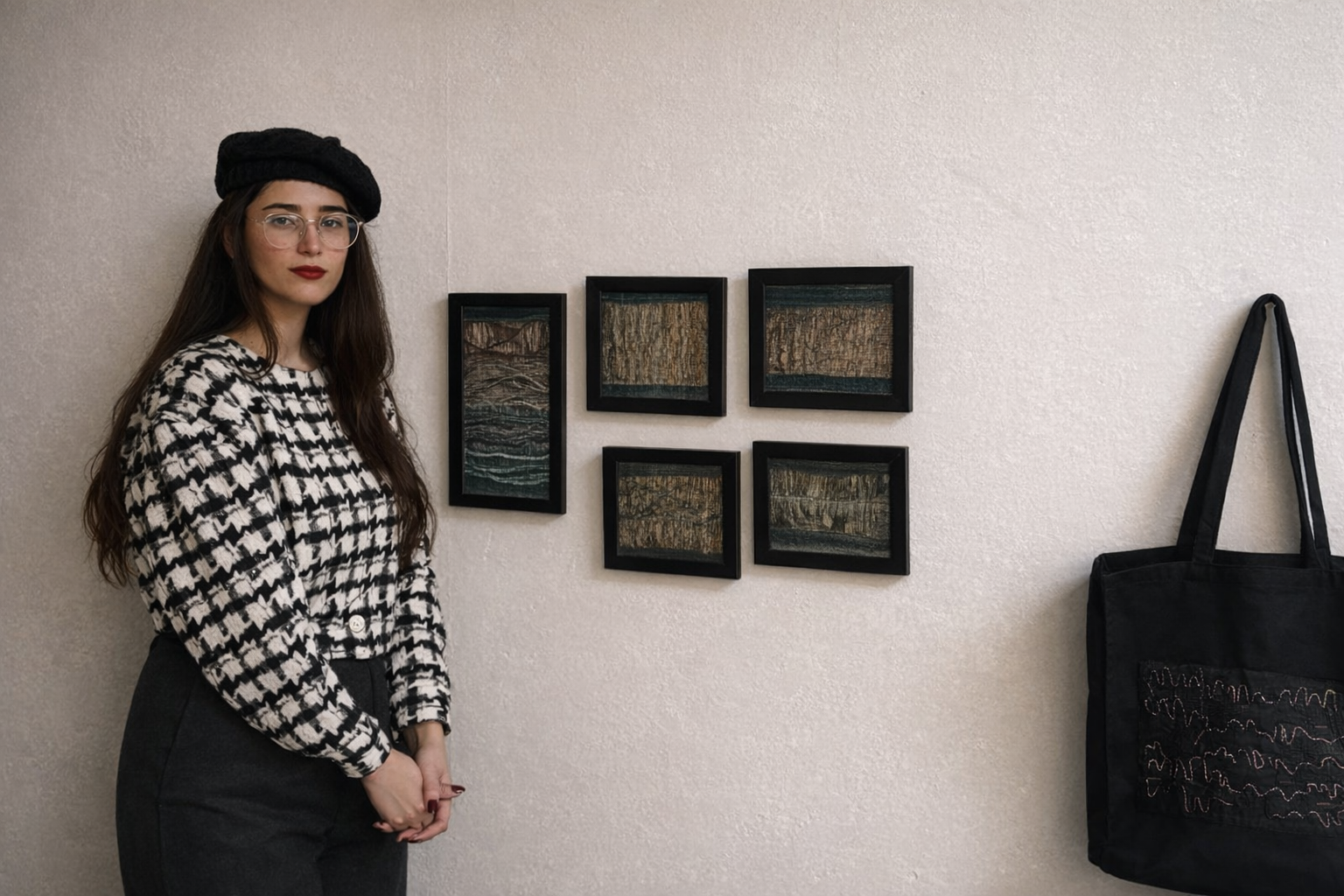
The project extends beyond the garment into a series of objects and surfaces, creating a cohesive system. Through display elements such as prints, textiles, and accessories, the work invites interaction and expands the experience of the language.
Designer Statement
Designed and developed by Ibtahaj Hassan, Silent Frequencies explores the intersection of sound, material, and emotion. The project reflects an interest in creating systems that translate intangible experiences into physical form, bridging sensory boundaries through design.
This project challenged me to think beyond traditional textile design by developing a system rather than a single outcome. It allowed me to explore how abstract concepts can be translated across mediums, opening possibilities for multisensory and interaction-driven design.